
Be Aware of the Sled Dog
Sled dogs have long been an integral part of Arctic culture and transportation, particularly in regions like East Greenland. These remarkable animals have been bred for their strength, endurance, and ability to navigate the harsh Arctic landscape. As both companions and working animals, sled dogs offer an extraordinary connection to the history and lifestyle of Inuit.
The Legacy of Greenland’s Sled Dogs
The Greenlandic sled dog, also known as the Greenland Dog or the Greenland Husky, is a hardy and ancient breed that has played a vital role in the history and culture of Greenland for over a thousand years. The species of sled dogs originated in Siberia, where it traces back for more than 10-20.000 years, and thus is one of the oldest species of dogs in the world. New scientific discoveries show that already more than 10.000 years ago people were breeding dogs for pulling sleds. The modern sled dog with its origin in Siberia shares ancestors with wolves, but they are different animals, as genetically they are quite different from today’s wolves. Sled dogs and people living in the Arctic share 9,500 years of history, surviving the harsh conditions of the Arctic, they lived together, covered long distances and hunted. Having a rich history spanning over a millennium, these dogs are one of the oldest and most isolated breeds globally, with no interbreeding allowed.
Quick Facts about the Greenlandic Sled Dog
- Greenlandic sled dogs are strong, intelligent, and highly social animals. They thrive in a pack environment and have a natural instinct to run and pull.
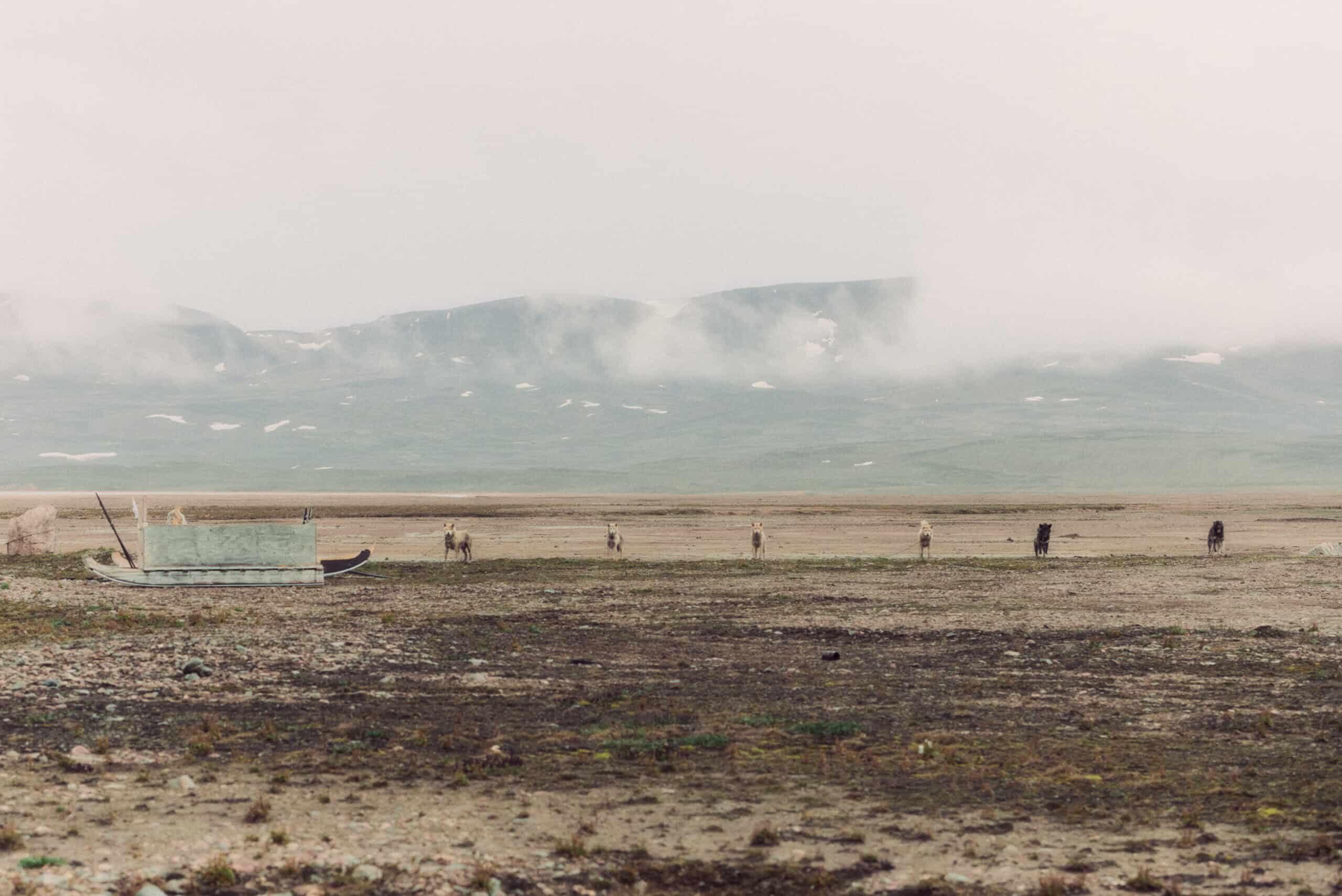
- Sled dogs are working dogs and live accordingly. Sled dogs have a wild side, so there is a reason why they are chained, other than preventing them from wandering off.
- When approaching the sled dogs at their home base, keep a safe distance from the adult dogs, pay attention to how much slack their chain has.
- The Musher is master of his own dogs. Never try to pet an adult sled dog without first asking the Musher.
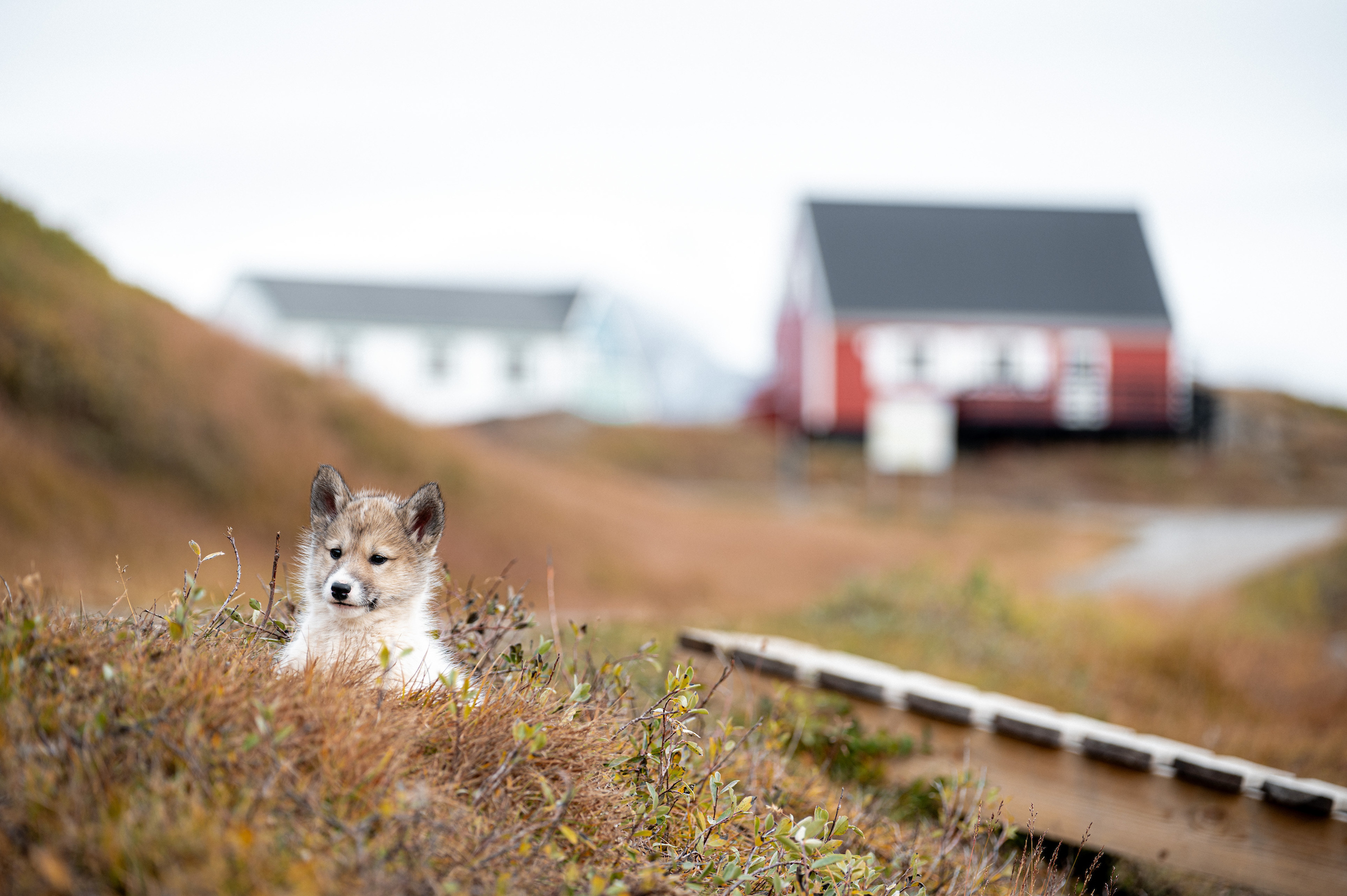
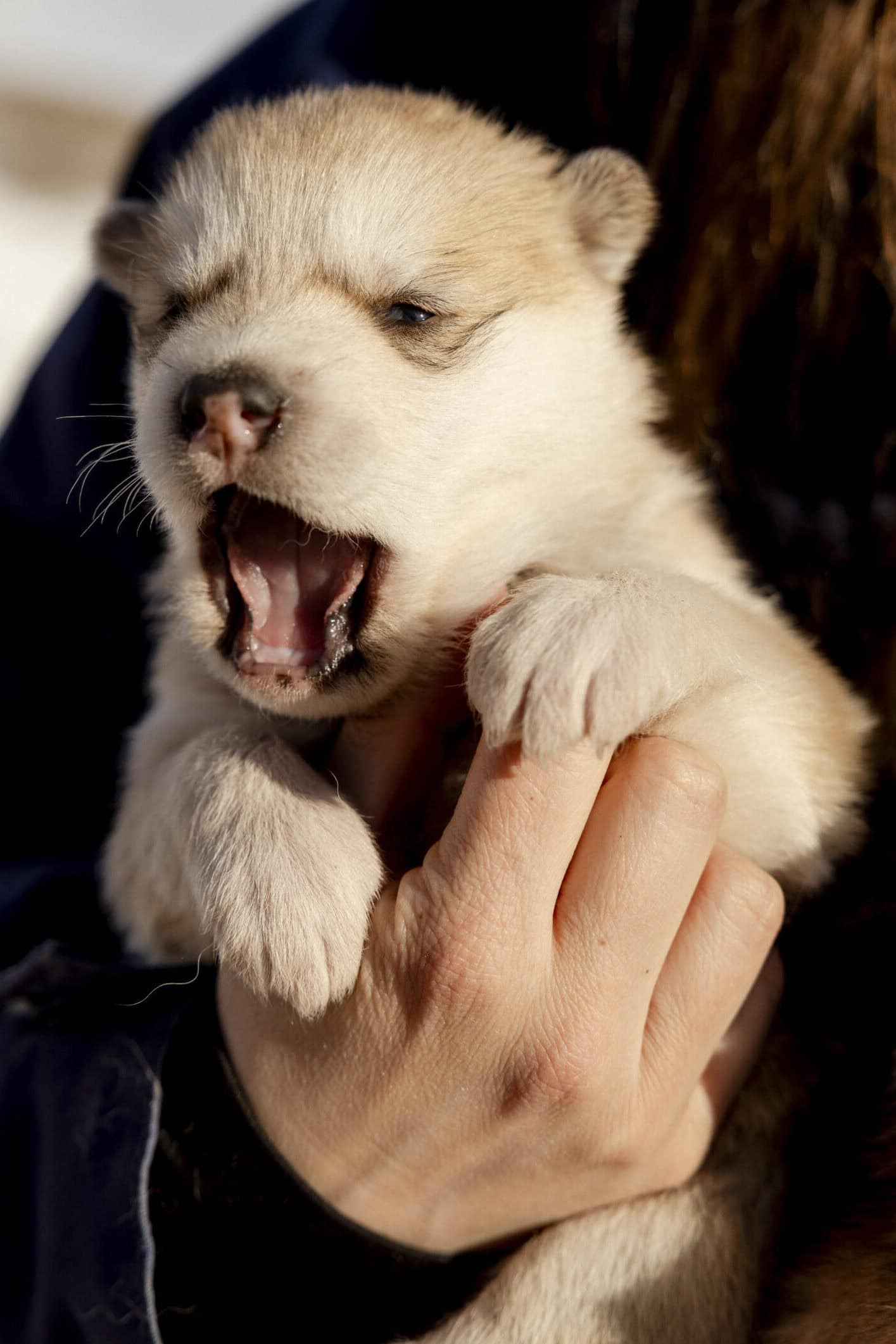
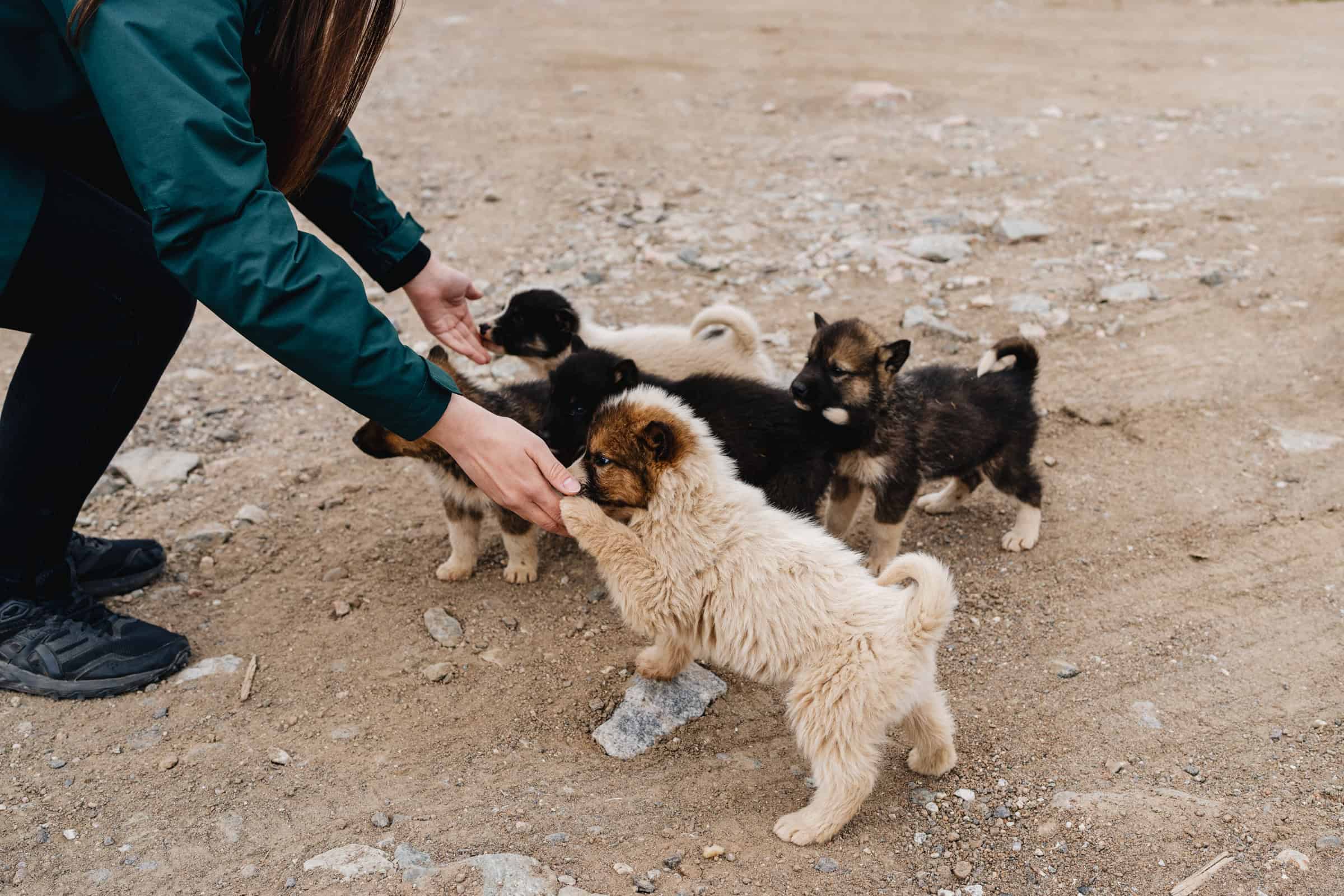
- Puppies up to 6 months are unchained and free to roam around, however often stay in proximity of the pack, especially the mother. They are cute and fluffy and hard to resist – actually safe to pet, but can of course be dirty.
- Sled dogs work in teams, and each dog has a specific role within the sled team. Understanding this dynamic can enhance your appreciation for their teamwork and training.
- Sled dogs have enhanced senses, they can smell and hear their owner approaching from a great distance, they can sense when the ice is too thin to cross and stop, and they can find their way home even in thick fog or a snow storm.
- The sled dogs can used as guards and warning signal against polar bears, as they have a particular howling sound once they can smell a polar bear in proximity.
The Life of a Working Dog in East Greenland
The Greenlandic dog is a working animal and is treated like that by their owner. This means they live and sleep out all year. In Tasiilaq most of the dogs are kept in special dog areas in the outskirts of the town or by the river midtown. While in the other settlements such as Kuummiut and Tiilerilaaq and the town of Ittoqqortoormiit, the dogs are kept close to the owner’s house. With the designated spot for the pack, you usually also have some storage for the dog food and equipment for maintenance as well as the sled and equipment for trips. Dog houses have been built as a shelter especially for the small puppies, while the grown dogs prefer to be out even through the strongest winter storms. When a puppy reaches the age of 6 months, it has to be chained due to regulations given by the home rule government. As the sled dog has a strong pack mentality, also the puppies will stay close to the mother and rest of the pack, as coming too close to a different pack can bring them in danger.
Winter is their working period, when they are put onto a shorter winter chain, sometimes positioned close to the shore or directly on the frozen sea ice for fast and easy access. Summer is their period to rest, as they are usually not trained that much, however some people move their dogs to small islands close by, where the dogs can roam freely during the summer months. Some dogs might be used as a guard for hiking or walking tours during summer, and with new four-wheeled carts, one can even get a glimpse of a dogsledding experience during summer. The sled dogs fur works as an isolation barrier during winter and yet keeps them from overheating during summer, they shift their fur twice per year. Thus, dogs are fed according to their activity levels, which means that during summer time when they are not very active, the dogs will only be fed every two to three days, while during winter they will be fed after every trip. Of course, it is also taken into consideration what they are fed – fresh seal meat, mostly seal or whale fat or dry food, such as kibbles, and the owner adjusts the feeding rhythm accordingly.
While the first year in the life of a sled dog is considered their training period, they have their peak between 2 to 4 years old. When a sled dog reaches the age of 7 to 9 years, they’re too old to work, which means they cannot keep up with the pack out on the tour. It then becomes a question of whether or not the owner can afford to keep those dogs that cannot sustain their hunting. Their well-being is closely tied to their owner’s livelihood, as they are crucial for hunting and fishing.
Physical Characteristics and Temperament of a Greenland Sled Dog
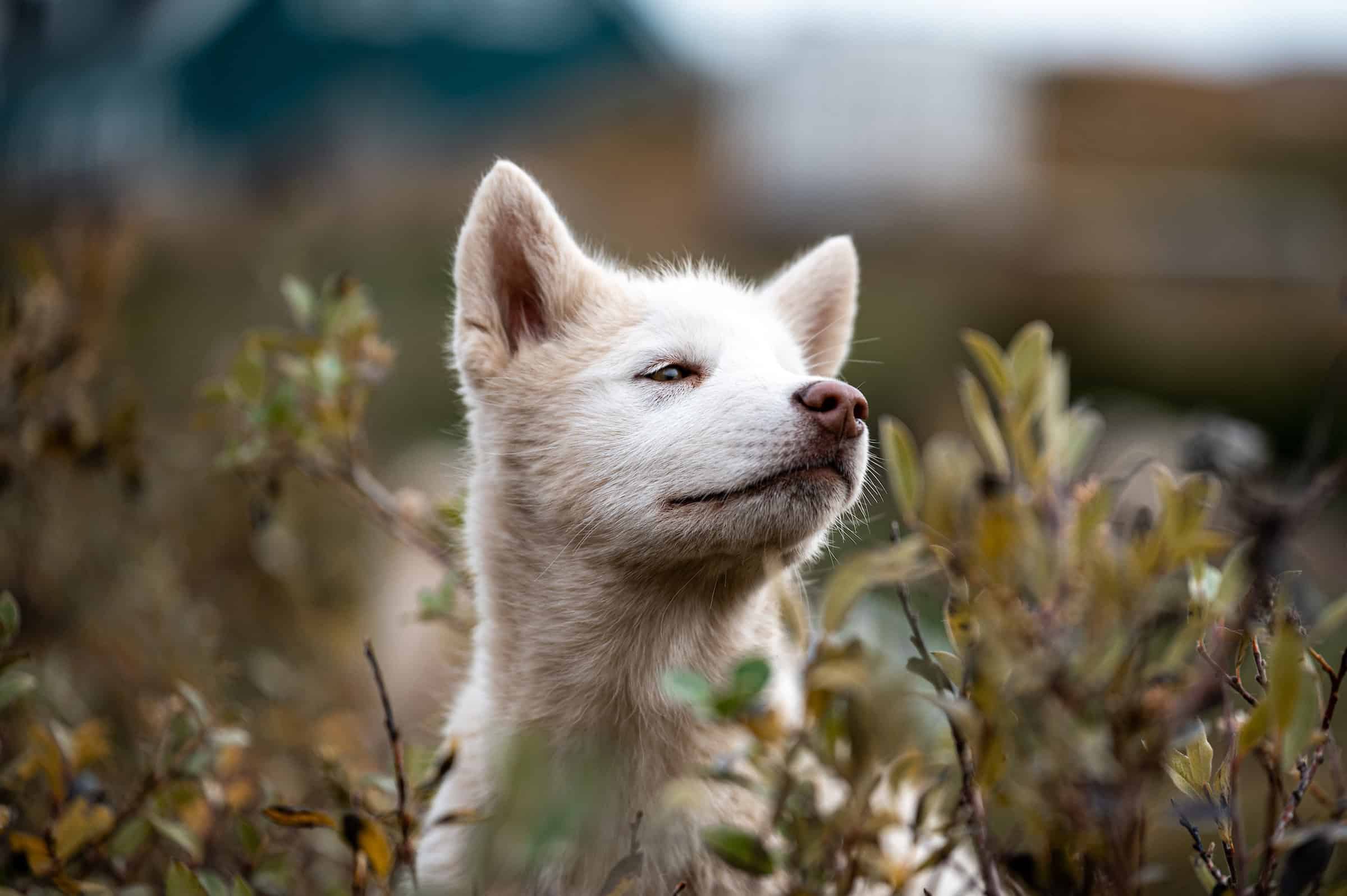
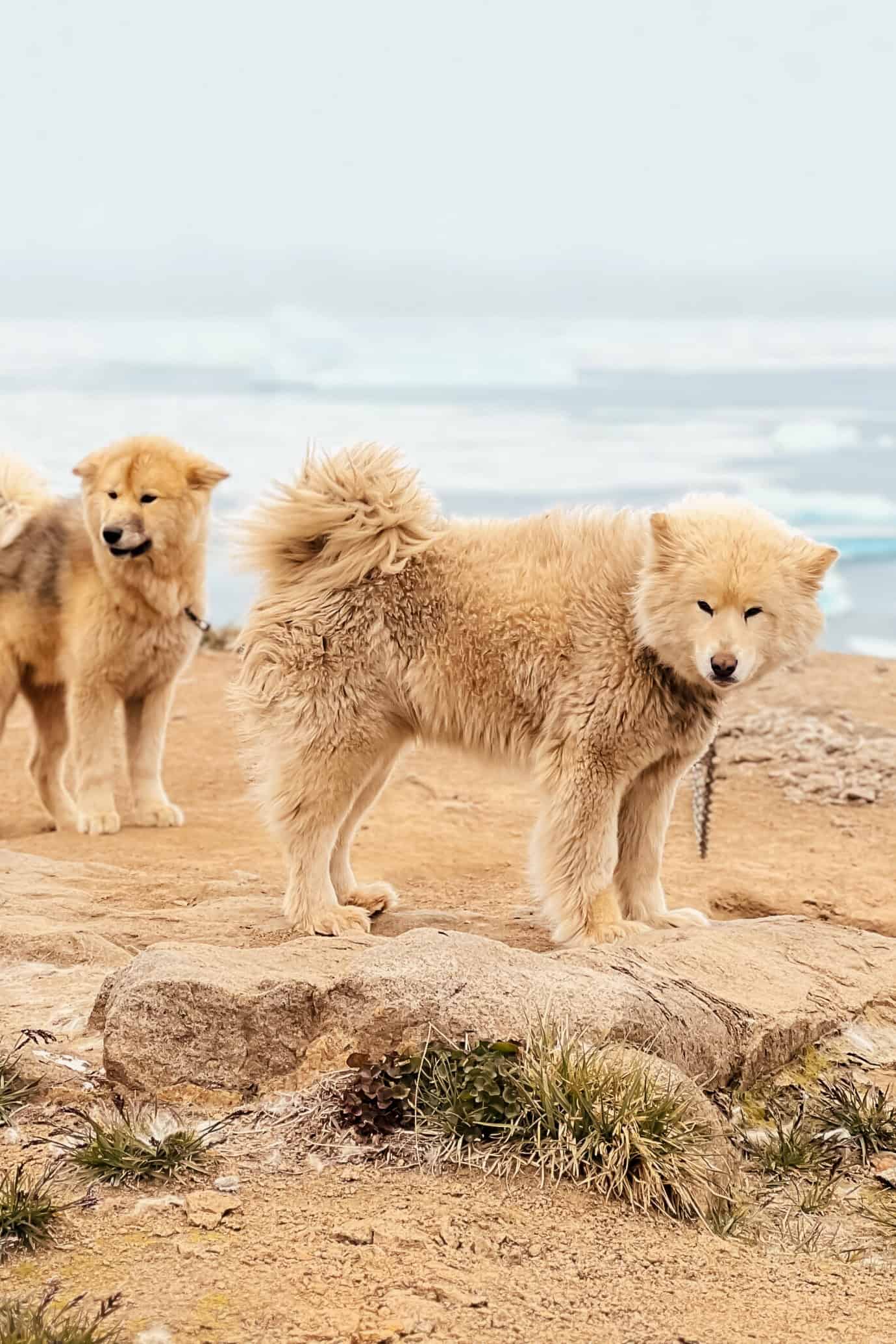
Greenlandic adult sled dogs typically weigh between 30 to 50 kilograms. They have a robust and muscular build, well-suited for endurance and harsh Arctic conditions. Their thick double coat provides insulation against the cold, with a dense undercoat and a weather-resistant outer coat. In wintertime the dogs have thick, clean and beautiful fur. In the summertime the very thick winter fur is being replaced with the cooler summer fur, when shifting it is normal that the fur falls off in quite large tufts. The fur comes in various shades and combinations of white, black, gray, brown and red. A female is capable of having puppies twice a year, with their pregnancy lasting 61 days and usually birthing around 4 to 8 puppies at a time. The puppies grow fast and by reaching the age of 1 year they have reached a fair size. The dog’s paws are large and almost round, with thick pads heavily furred between the toes. A well-developed loin and strong thigh muscles make up the rear of the body. The Greenlandic dog has a strong pack mentality, and respects its hierarchy, that is unless he feels there is an opening for advancement. Greenlandic sled dogs are known for their stamina, strength, and resilience, making them exceptional working dogs. They are highly social and enjoy the companionship of other dogs, making them excellent team players in sled dog packs.
How to Behave around Sled Dogs
- Sled dogs can be protective of their territory and pack. Always approach them calmly and respectfully, and ask the owner for permission before petting.
- When approaching, understanding a dog’s body language is crucial. Signs of relaxation include a wagging tail and a relaxed posture, while raised hackles or growling may indicate discomfort, fear or aggression.
- Sled dogs respond to the energy of those around them. Remain calm and confident, as they can pick up on anxiety or nervousness.
- Always listen to and follow the owner’s instructions, both at the dog place and on the tour. They know their dogs well and can guide you on how to interact safely and effectively.
- The musher will let you know when and whom of his dogs you can approach – usually this should happen at the dog place, after the tour.
- Please refrain from approaching the dogs when harnessed or during the tour.
- Sled dog puppies are usually safe to pet, especially when they approach you in excitement, but pay attention if the puppy is close to the mother as they might act very protective of their puppies.
The Art of Dog Sledding
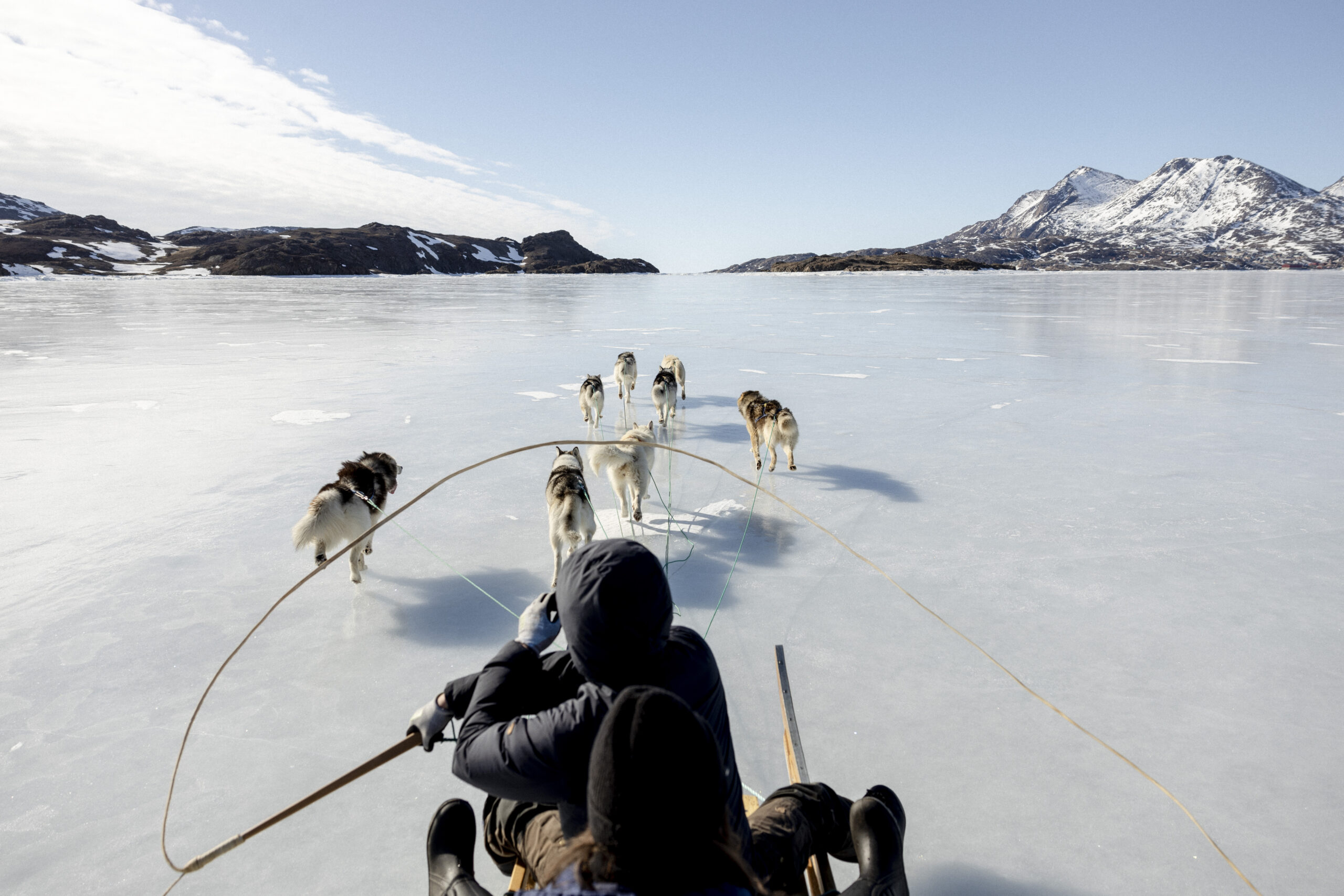
Still to this day the Greenland sled dog plays a vital role in hunting communities of East Greenland. In recent years, the population of sled dogs has declined due to changes in transportation, lifestyle and snow/ice conditions all over Greenland. Snowmobiles, as many other motorized vehicles, offer faster ways to move around. Yet, the experience of a dog sled trip is a unique way of immersing into the Arctic winter environment. For more than 5.000 years this has been the primary mode of transport during the long winter months filled where the area is covered in snow. Be aware, the Greenland dog that is pulling the sled, is a hard-working, wild purebred dog bursting with energy. These dogs have helped Inuit people survive in the harsh Arctic environment, and their importance is deeply ingrained in Greenlandic heritage. Evolving from the exclusive purpose of supporting hunting and fishing activities during winter times, in the present day many hunters combine this with offering the unique dog sledding experience to tourists. With training and the time, a musher spends with his dogs, a few commands and a sturdy whip are the only tools needed to lead the pack of sled dogs in front of the sled. These remarkable dogs possess an innate ability to interpret their surroundings, allowing them to respond instinctively to the changing environment and help navigate the environment.
The Characteristic Sled
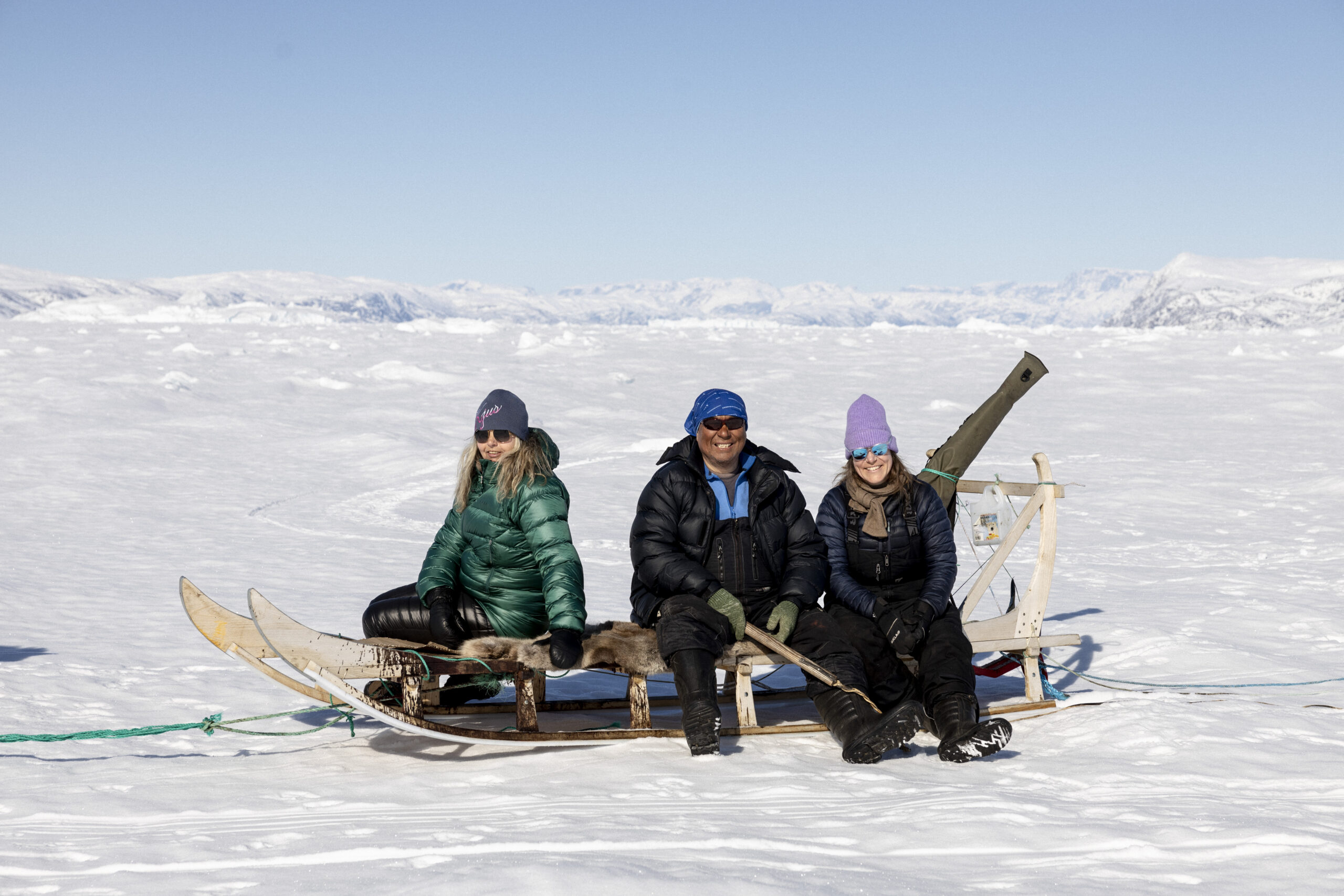
The sleds vary in length depending on the duration of the trip, the number of people and amount of equipment to be taken on the trip. They are between 1.5 and 3 meters long. The musher can either stand at the end of the sled for better navigating or sit on the sled. In the Ammassalik region, sleds are typically designed for versatility in a variety of terrains, including frozen fjords and mountainous landscapes. These sleds feature a lightweight construction that allows for easier maneuverability in both snow and ice. The design may incorporate curved runners for better handling and stability, making them ideal for the steep and rugged terrain of East Greenland. For safety reasons the bigger sleds of 3 meters are usually equipped with a break at the rare end of the sled, for downhill passages. In contrast, the sleds used in Ittoqqortoormiit are generally built for durability and are equipped to handle long distances across vast, open ice fields and rougher terrains. These sleds are often sturdier, with longer runners and reinforced structures to withstand the harsher conditions and longer journeys typical of the area.
The Positioning of the Dogs
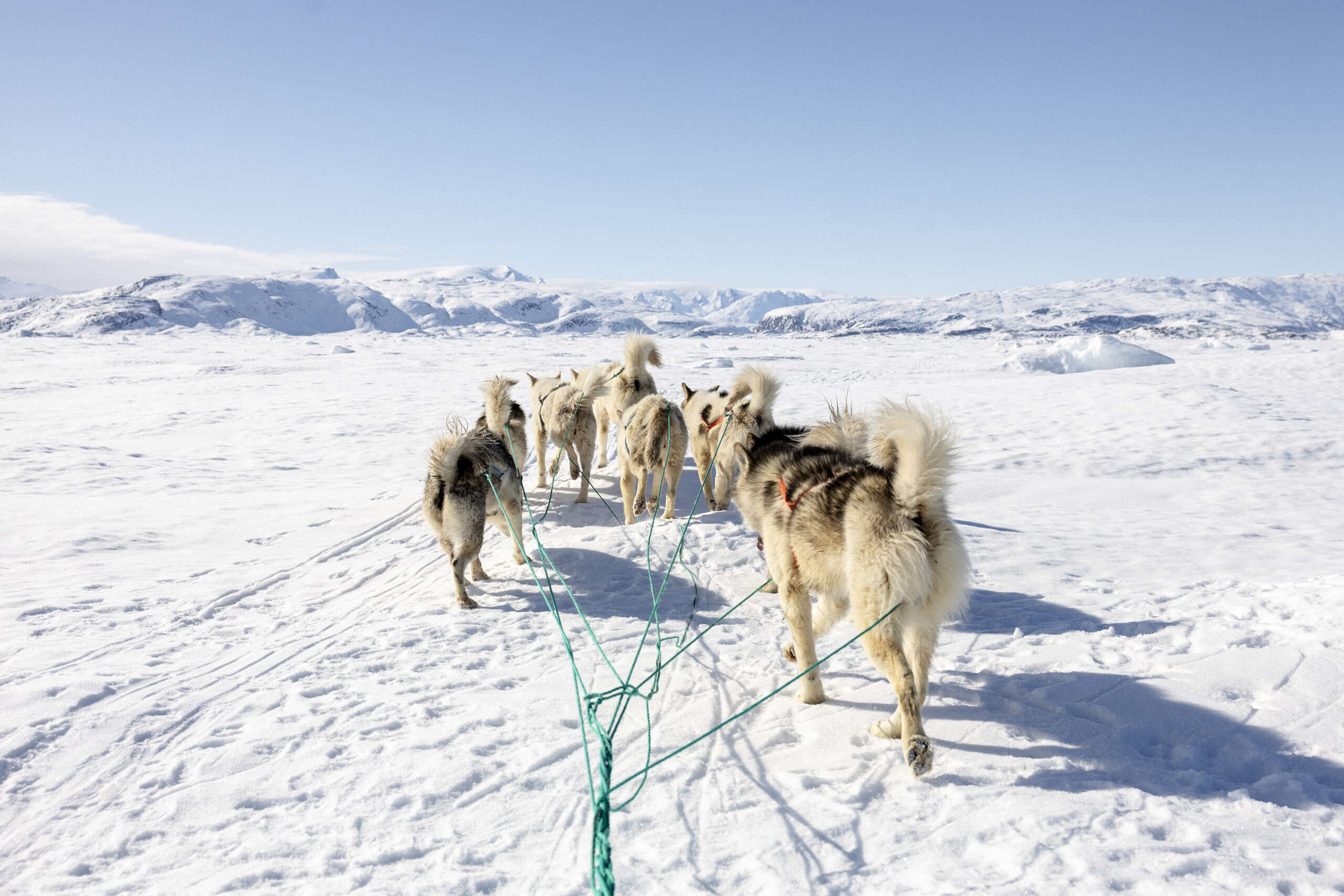
The size of the sled and amount of people and equipment to be taken on the trip will the decide how many sled dogs will be harnessed in front of the sled. One of the sled dogs is the designated leader of the pack, communication of signals for changing directions, faster or slower commands will be addressed to the leader of the pack and if trained well the rest of the team will follow accordingly to the movement and behavior of the leader. The lead dog will have the longest leash to be slightly ahead of the pack. According to their abilities the other sled dogs will be positioned in what looks like a fan in front of the sled. Common for East Greenland is that the leashes are not all of the same lengths, but having two of the same lengths spread across, the sled dogs with the strongest legs will be the ones on the shortest leaches, closest to the sled.
Experiencing Dog Sledding in East Greenland
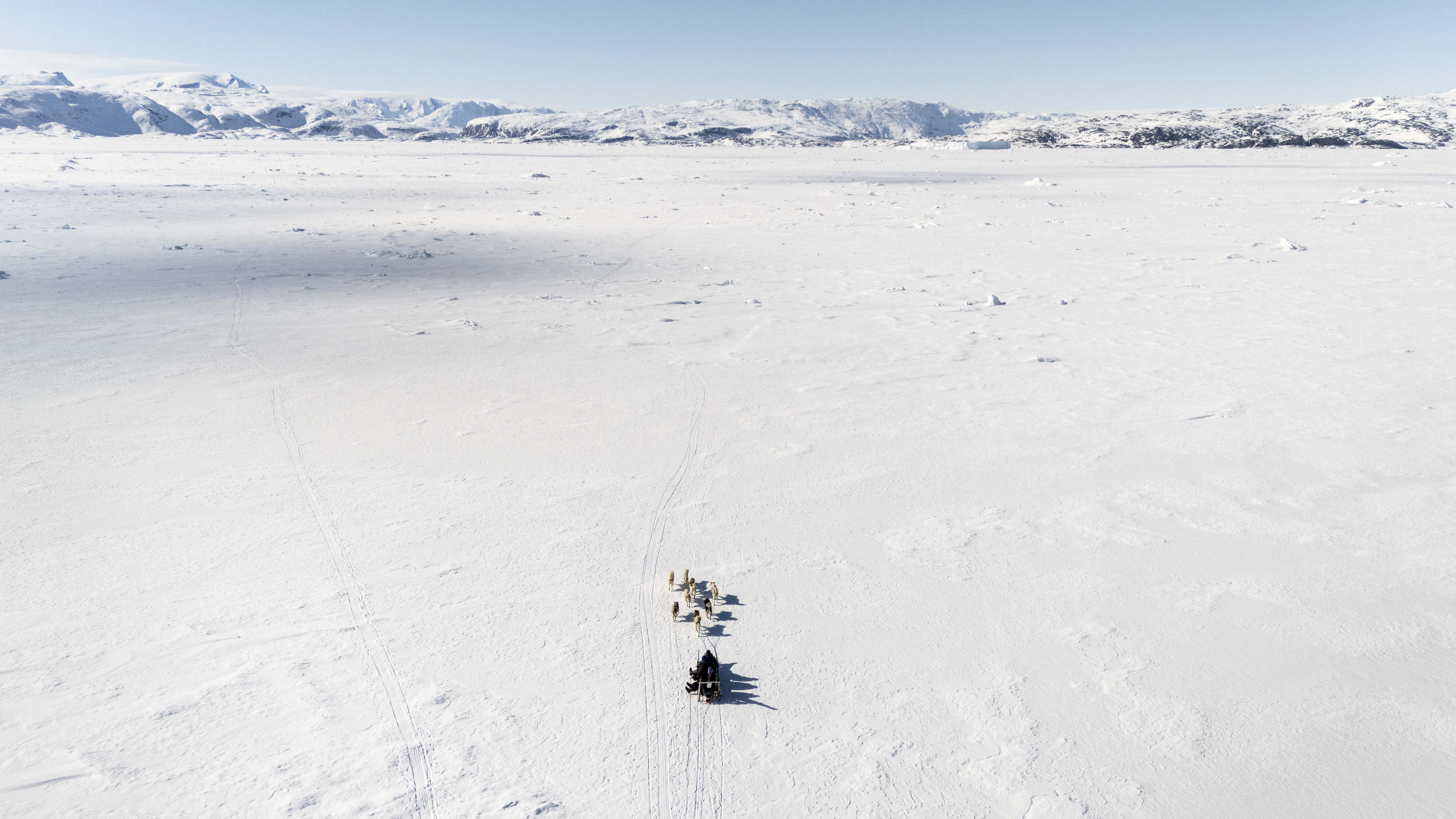
Dog sledding is a thrilling way to experience the Arctic wilderness, and East Greenland offers the perfect backdrop for this adventure. It’s one of the most exhilarating ways to immerse yourself in the breathtaking winter landscapes and natural beauty of the region. Picture yourself on the dog sled, sitting on a warming piece of reindeer or muskox skin in your warm winter cloth, gliding through the enchanting winter wonderland, the crisp Arctic air filling your lungs, snowflakes landing on your face, and the rhythmic sound of the sled gliding over the snow harmonizes beautifully with the natural ambiance. Majestic, snow-covered peaks tower around you, their silhouettes softened by a delicate layer of frost. Each turn unveils breathtaking vistas of untouched wilderness, from crossing over frozen lakes, to tracking up and down small hills and ridges across the backcountry, to covering seemingly endless stretches of frozen sea ice. While the tranquility of the expansive landscape surrounds you, every moment on the sled is filled with an exhilarating sense of freedom, creating unforgettable memories of East Greenland’s captivating winter beauty.
About the Author
 Anna Burdenski’s journey has taken her to a variety of places, giving her a broad perspective on life. Born and raised in Germany, she’s also lived in Malaysia, Denmark, and Austria before settling in Tasiilaq, East Greenland in November 2021. Having worked in various roles in the tourism landscape, this range of experience allows her to bring different perspectives together in her current role as tourism coordinator for Visit East Greenland. Shaped by her experiences in different parts of the world, Anna enjoys the simple yet meaningful lifestyle of East Greenland. Her journey has given her the tools to balance the needs of visitors while respecting the local culture and environment, introducing and connecting visitors to the everyday life and natural beauty of the region. Nature is a constant source of inspiration, as she has come to respect and embrace the power and unpredictability of nature.
Plan Your Trip
Plan your East Greenland adventure, tapping into local knowledge, expert tips, and essential planning tools.
Towns & Settlements
Explore East Greenland’s quaint towns and remote settlements, discovering unique landscapes, rich culture, and rugged Arctic beauty.
Tour Providers
Once you’ve chosen your adventure, book your East Greenland journey through local operators or plan it independently.
Articles
Read through our curated articles about East Greenland, deepening your insight into its seasons, traditions, and wonders.
Resources
Discover East Greenland’s essential resources and planning tools, ensuring deeper insights, trusted guidance, and a fulfilling adventure.