

Weather in East Greenland
Weather shapes every part of life and travel in East Greenland. Wind, sea ice, fog, snow, and changing visibility influence how people move, travel, and experience the landscape throughout the year.
This page combines practical information and local perspectives about the weather in East Greenland. You will also find a practical guide explaining what to do if the weather changes your travel plans, alongside reflections on the East Greenlandic concept of tsilar, which are all the conditions you move within.
In East Greenland, the weather is not only something you observe. It shapes rhythm, timing, movement, and the experiences that stay with you long after the journey ends.
Climate & Temperature
East Greenland has a polar tundra climate that is harsher than that of other parts of the country. This means long, cold winters and short, cooler summers, with strong influences from the ocean, wind, and sea ice.
There is a difference between the temperature on a thermometer and how it actually feels. Wind, sunlight, shadow, fog, and proximity to ice or water all affect how you experience the cold. Conditions can change several times in a single day. Be prepared to adjust your clothing throughout the day.
Weather conditions in East Greenland are shaped by the interaction between the Greenland Ice Sheet, fjords, sea ice, and the North Atlantic.
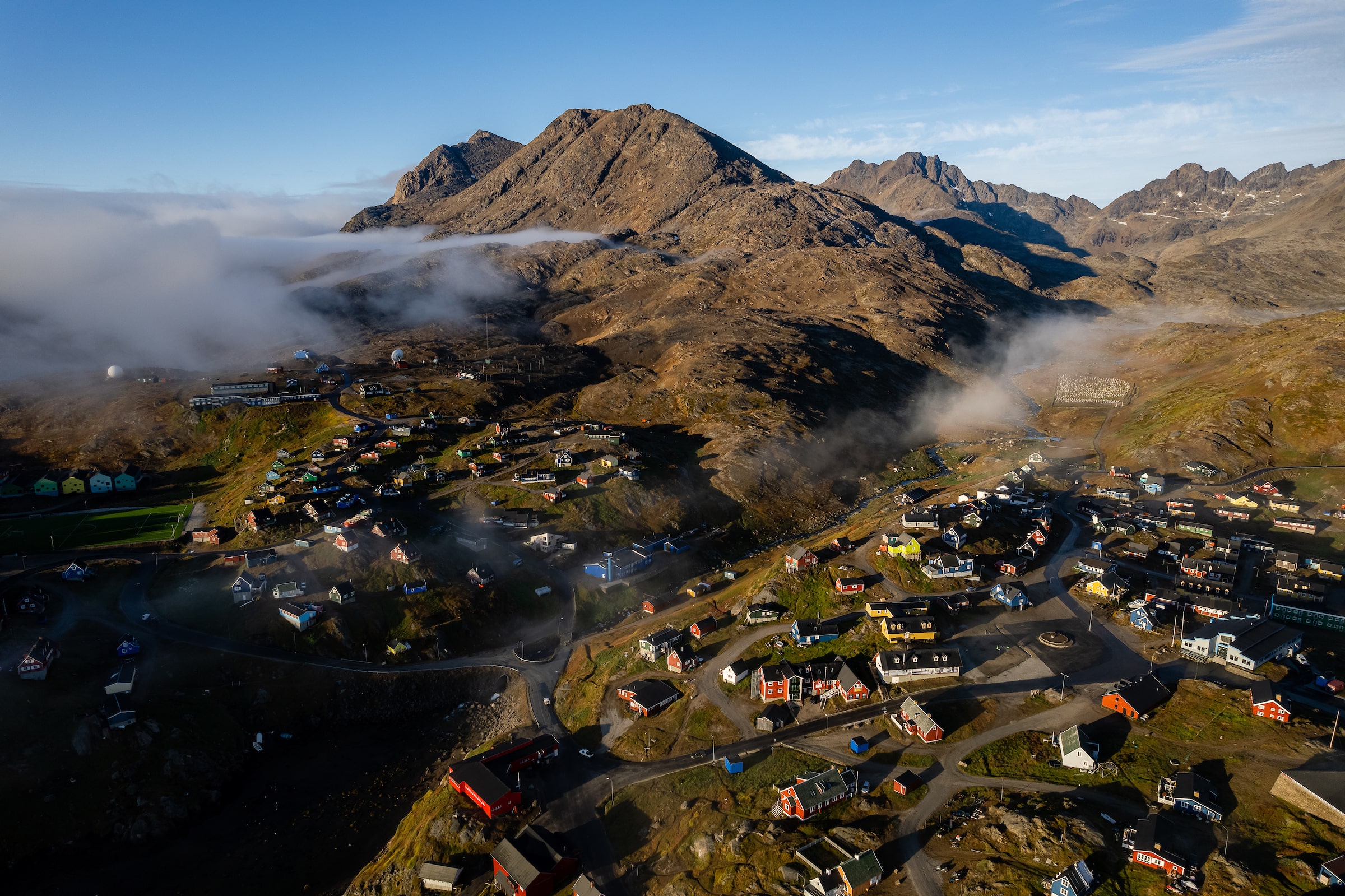
The Ammassalik area in East Greenland receives more precipitation than other parts of Greenland. Precipitation comes in different forms: snow, rain, fog and moisture from the ocean. At the same time, the air can feel dry because cold temperatures reduce humidity. While some periods of rain can feel wetter, the winds often bring cold, dry air from the ice sheet. The environment feels dry because the year-round cold air keeps humidity low. The winds can be strong and persistent. The sea ice is constantly moving and changing. Fog can reduce visibility from endless to less than a few meters within minutes. Snow drift can be intense when moving in the backcountry, but even in the towns and settlements, there can be a few centimetres of snow next to a pile of 2 meters of snow. Light conditions affect visibility and timing throughout the year.
Average Maximum Temperature in °C
| Jan | Feb | Mar | Apr | May | Jun | Jul | Aug | Sep | Oct | Nov | Dec | |
|---|---|---|---|---|---|---|---|---|---|---|---|---|
| Tasiilaq | 3,6 | 2,7 | 4,2 | 6,3 | 7,6 | 15,7 | 14,9 | 20,1 | 10,1 | 10,3 | 3,1 | 5,2 |
| Ittoqqortoormiit | -5,4 | 0,2 | 6,5 | 4,6 | 6,6 | 17,6 | 22,3 | 19,3 | 10,6 | 3,8 | - | 0,0 |
Average Minimum Temperature in °C
| Jan | Feb | Mar | Apr | May | Jun | Jul | Aug | Sep | Oct | Nov | Dec | |
|---|---|---|---|---|---|---|---|---|---|---|---|---|
| Tasiilaq | -14,9 | -13,9 | -19,8 | -12,3 | -7,9 | -1,8 | 0,9 | 2,7 | -1,3 | -6,8 | -7,2 | -15,8 |
| Ittoqqortoormiit | -27 | -29,1 | -28,4 | -27,8 | -12,5 | -1,9 | 3,2 | 1,4 | -2,3 | -11,3 | - | -25,2 |
Pilarngaq
Pilarngaq forms when extremely cold, dense air builds up on the Greenland Ice Sheet. When pressure conditions change, this air accelerates downhill toward the coast through fjords and valleys. This is why East Greenland’s landscape matters so much: the mountains and fjords intensify the wind like natural wind tunnels. Interestingly, locals often associate unusually clear skies with an approaching piteraq. This way, a pilarngaq usually announces itself with what we call the calm before the storm, when the sky clears up, and it becomes very quiet for a brief moment. This happens because the descending air from the ice sheet is very cold and dry.
This katabatic wind can bring sudden hurricane-force winds, drifting snow, and extremely low visibility within minutes, through snow or sand/earth swirled by the wind. In extreme cases, wind gusts can reach 180-300 km/h, and temperatures can easily fall below -20°C. In general, the average wind speed is around 15-30 m/s, while sudden gusts can exceed 50 m/s. This is why the local name of the wind is often described as the one that attacks you, as the wind gusts are sudden, unexpected and very forceful. Since the most powerful pilarngaq ever recorded in 1970, which unfortunately destroyed half of the town at the time, there is a light warning system in town that alerts you to upcoming storms.
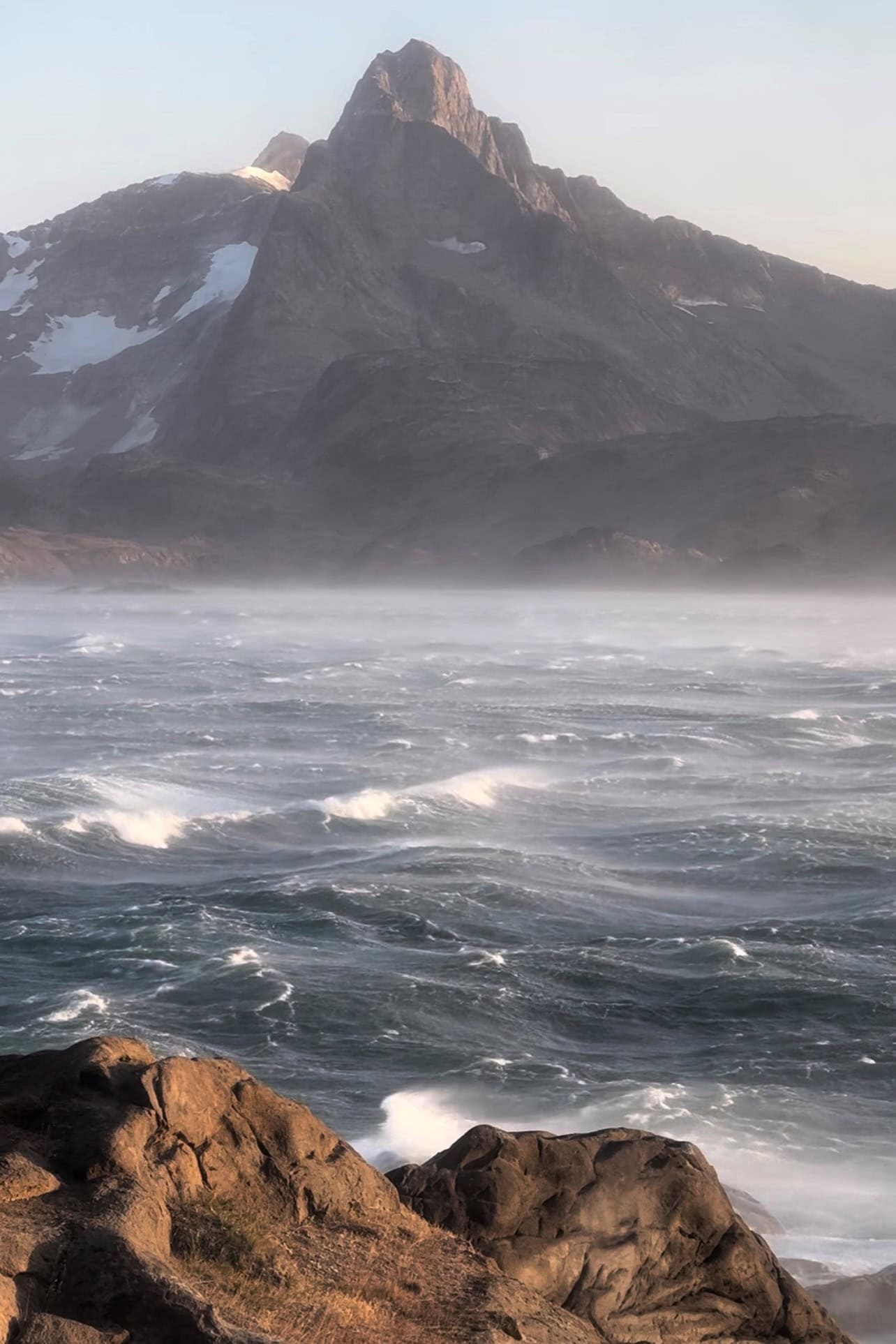
Pilarngaq is the most powerful storm in East Greenland
Videos: Anna Burdenski, Visit East Greenland
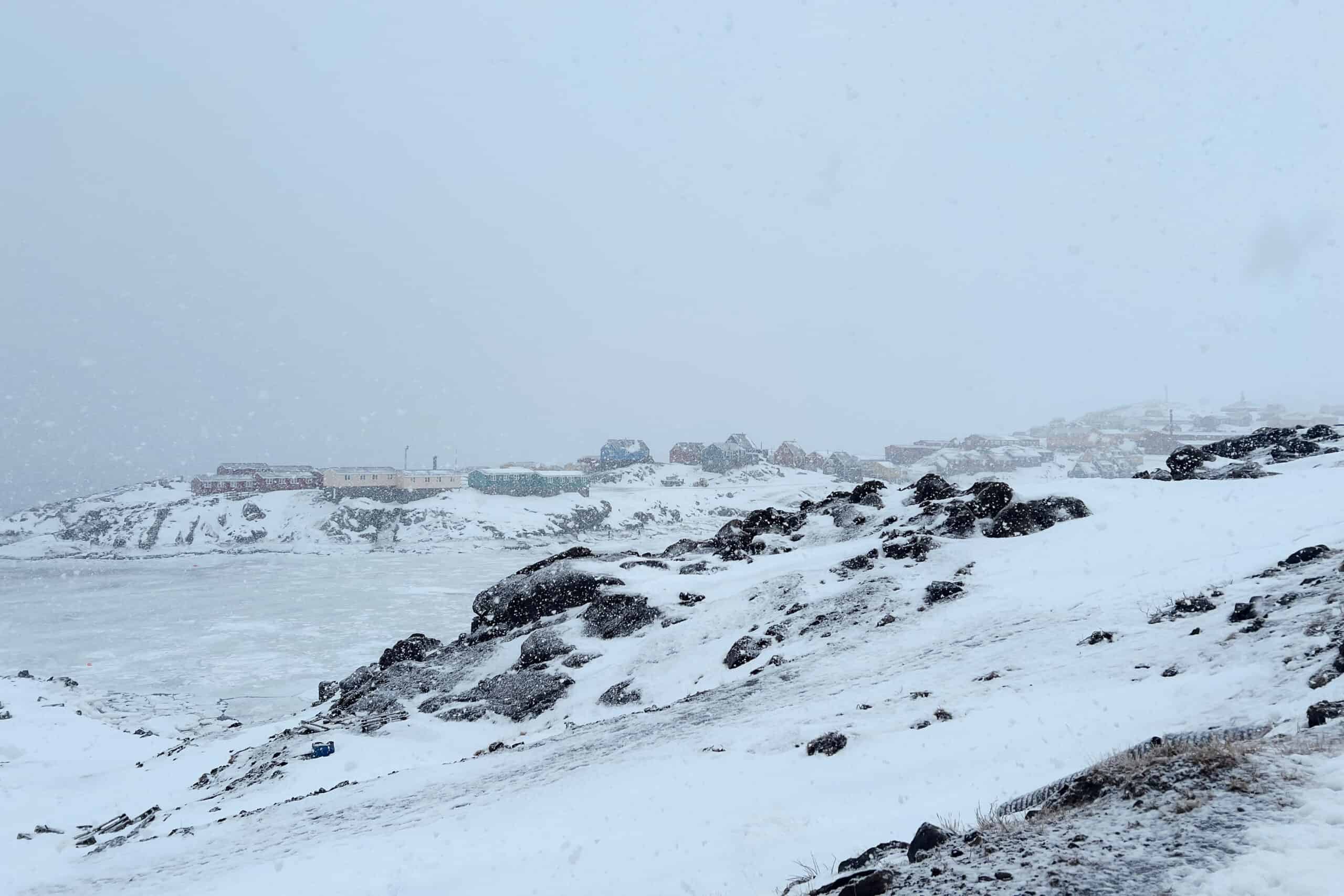
Neqqajaaq is a strong northeasterly coastal storm
Neqqajaaq
Neqqajaaq is a local term used for strong northeasterly storm conditions that frequently affect the east coast of Greenland, especially the towns and settlements closest to the ocean. A neqqajaar arrives from the northeast, where cold Arctic air meets low-pressure systems moving through the Greenland Sea and North Atlantic. As these winds move toward the coast, steep mountains and narrow fjords intensify the conditions, often creating strong winds, snow or rain, fog, and rapidly changing visibility. Wind speeds during a neqqajaar typically reach storm-force speeds of 25–28 m/s, with hurricane-strength gusts between 33–40 m/s, while temperatures are around +/-0°C.
The pack ice
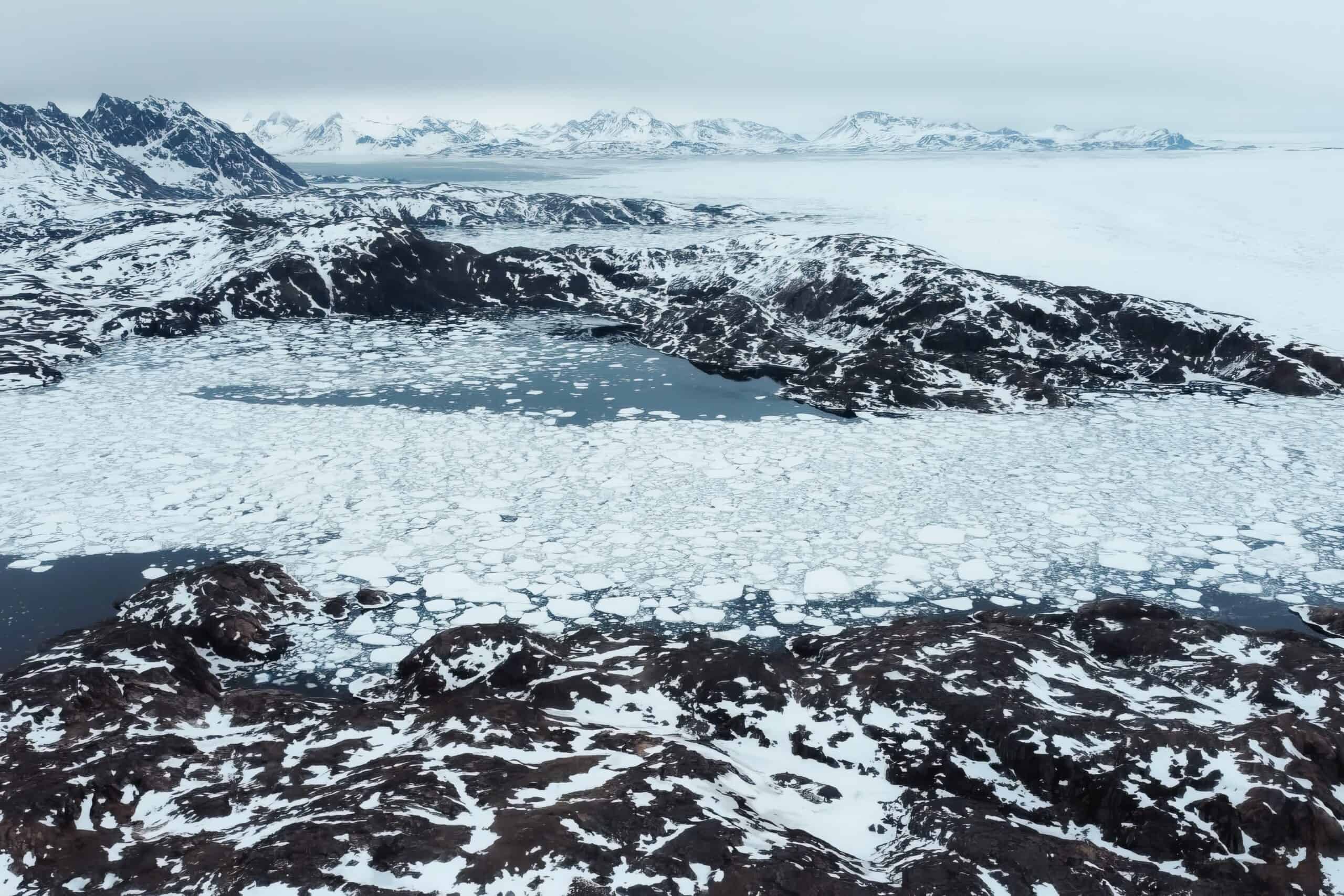
The pack ice along the East Greenland coast is part of one of the largest moving sea ice systems in the Northern Hemisphere. Driven south by the East Greenland Current, vast fields of Arctic sea ice, icebergs, and cold polar water move continuously along the coastline for many months of the year. This is one of the reasons East Greenland experiences much heavier sea-ice conditions than West Greenland. The ice is constantly shaped by wind, weather, ocean currents, and temperature. It is never completely still, opening routes in one moment and closing them in the next.
Further north, Ittoqqortoormiit is often surrounded by pack ice from December to June, while in the Ammassalik region further south, pack ice is typically present from January to May. Conditions vary from year to year depending on weather, wind, and ocean currents. Pack ice is also an essential part of the Arctic ecosystem. It provides habitat for polar bears, seals, walrus, and seabirds, while many local hunting traditions and ways of life continue to depend on the seasonal movement of the ice. You can see how pack ice looks in the photo below.
Weather and Northern Lights
Seeing the northern lights depends on two things: darkness and clear skies.
What does it mean:
- You may need to wait for the right conditions
- Visibility can change within hours
- Clear nights often appear unexpectedly
Practical advice for you:
- Plan for multiple nights to increase your chances
- Be ready to go outside on short notice
- Trust local guides, they follow weather and sky conditions closely
- Remember to look out the window of your accommodation, you will be surprised that you might be able to see them from the comfort of your accommodation

Weather and Transport
All transport in East Greenland depends on the weather. Flights, boats, and helicopter transfers are affected by wind, visibility, and sea ice conditions.
What does it mean:
- Departures may be delayed or rescheduled
- Routes may change
- Travel can happen quickly when conditions open
- Movement follows the conditions, not fixed schedules.
Practical advice for you:
- Allow flexibility in your travel plan
- Avoid tight connections when possible
- Stay ready to move when conditions improve
- This is how travel works here.
- Decisions are made based on safety and real-time conditions.
- Alternative options are explored whenever possible.
Weather and Activities
Weather shapes all activities in East Greenland. Hiking, boat trips, and excursions depend on wind conditions, ice and water access and visibility.
What does it mean:
- Activities may be adjusted or replaced
- Routes can change during the day
- Some experiences may not be possible in certain conditions
- Plans don’t fail; they adapt.
Practical advice for you:
- Expect daily adjustments to your itinerary
- Be open to alternative experiences
- Trust that the local guides choose the best option for the day

Weather and Everyday Life
Weather doesn’t only affect travel, it shapes everyday life in East Greenland.
What does it mean:
- Goods may arrive later than planned
- Selection in shops can vary
- Delays are part of daily life, not an exception
- What may feel like a disruption to a visitor is a normal rhythm here.
Practical advice for you:
- Bring essential items with you
- Be flexible with expectations
- Make sure that you have your necessary medication with you
TSILAR
When the journey pauses
Sometimes, the weather changes your plans.
A boat doesn’t leave.
A flight is delayed.
A journey pauses.
We understand what that feels like.
Plans matter.
Time matters.
And when things shift, it’s natural to feel frustrated, uncertain, or out of control.
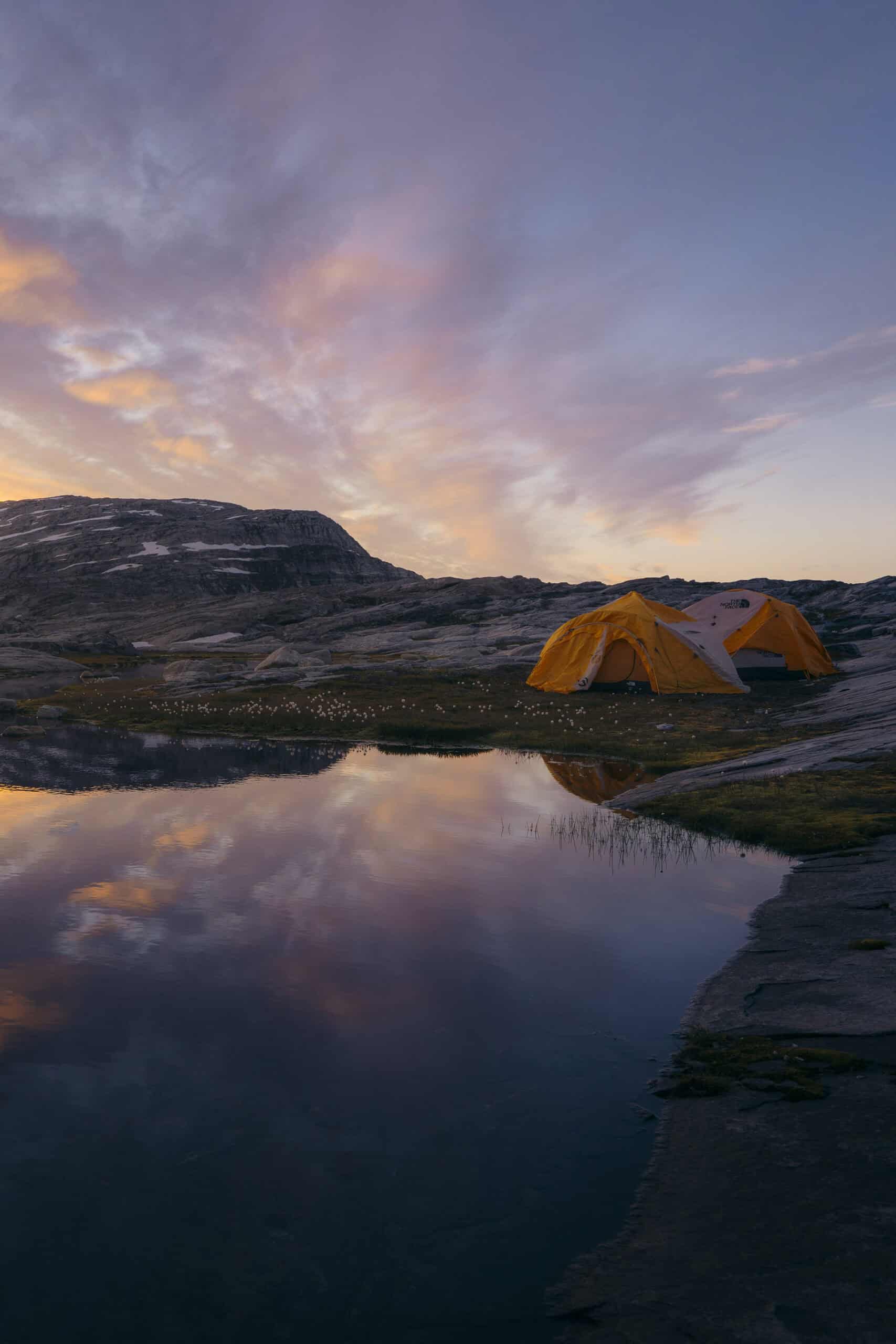

When the weather takes over
In East Greenland, the weather affects every journey.
And while this is normal here, it doesn’t always feel easy.
Living with the unexpected is an art.
We know it can be difficult, and we’re here to guide you through it.
There is a local way of relating to weather:
not working against it, but moving with it.
Tsilar
To understand mobility here, it helps to understand tsilar
(also known as sila in West Greenlandic)
While weather is used as a translation of the East Greenlandic word tsilar.
It at the same time describes something more:
the conditions of the world around you,
and how everything connects in a given moment.
Travel here follows tsilar.
If you will the conditions you are moving within.

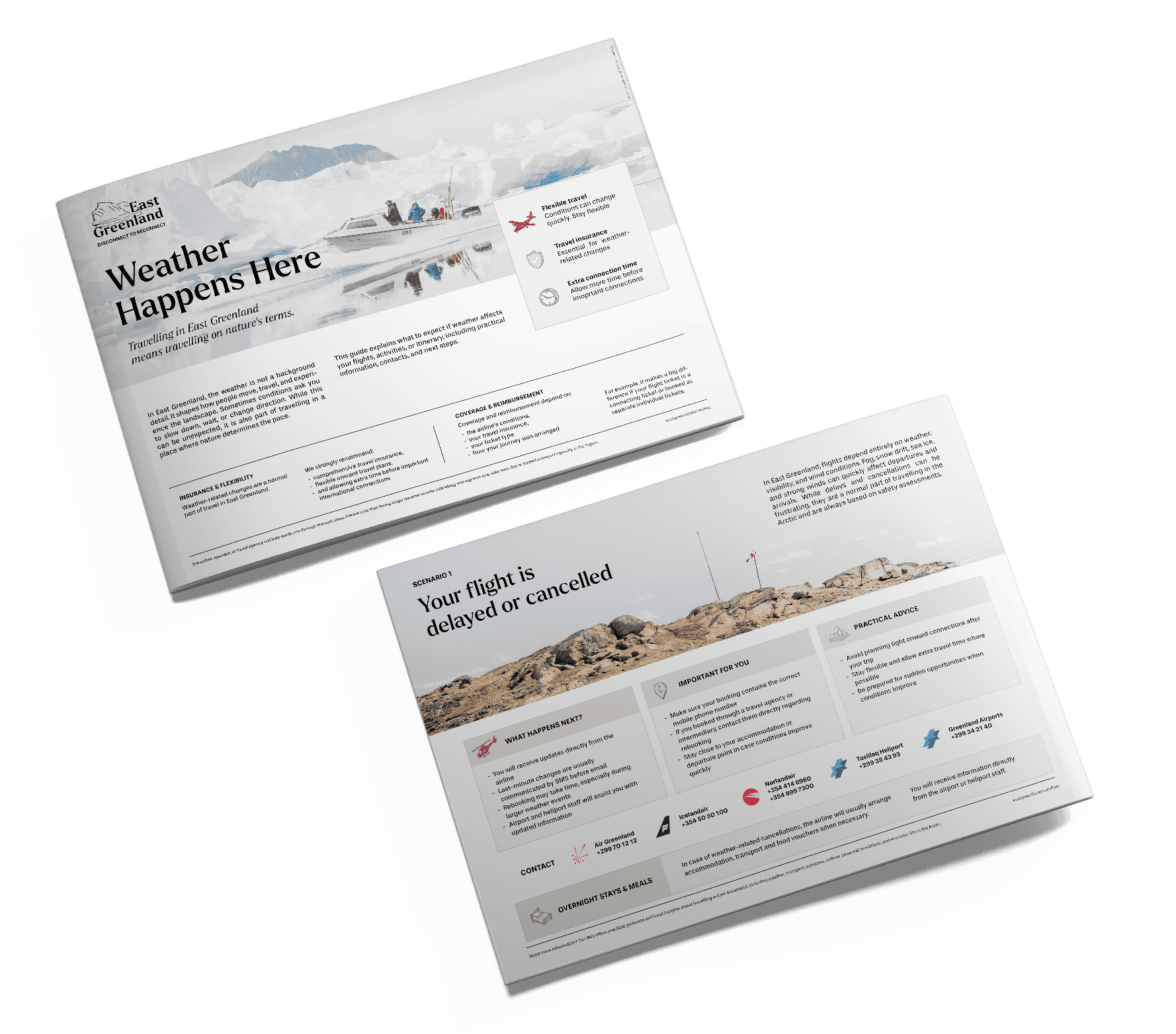
FREE PDF GUIDE
Weather Scenarios in East Greenland
What happens if your flight is cancelled, your activity changes, or your itinerary is affected by weather?
Get practical advice, local contacts, insurance guidance, and next steps for 3 common travel scenarios.

Mosquitoes in East Greenland

Travel Diary from a Dog Sledding Adventure in East Greenland

Analogue Horizons – A Photo Journal
Plan Your Trip
Plan your East Greenland adventure, tapping into local knowledge, expert tips, and essential planning tools.

Towns & Settlements
Explore East Greenland’s quaint towns and remote settlements, discovering unique landscapes, rich culture, and rugged Arctic beauty.
Tour Providers
Once you’ve chosen your adventure, book your East Greenland journey through local operators or plan it independently.
Articles
Read through our curated articles about East Greenland, deepening your insight into its seasons, traditions, and wonders.
Resources
Discover East Greenland’s essential resources and planning tools, ensuring deeper insights, trusted guidance, and a fulfilling adventure.