
About the Author

Annie Aggens loves the polar regions and gets to talk about them every day as director of PolarExplorers, an adventure travel company that organizes and guides polar expeditions. She has guided multiple expeditions to the North Pole, South Pole, Greenland and Iceland. She is the author of the Encyclopedia of Outdoor and Wilderness Skills and she often presents about polar history and expedition travel. Her role as polar guide allows her to teach people about the effects of climate change on the Arctic and polar regions. Favorite tent pastime? Playing her “guitarita” and having poetry slams. She is on the board of the International Polar Guide Association.
As a polar expedition guide, I’m used to leading people on adventures to remote places that are cold and demanding, but also beautiful and delicate. I treasure any opportunity to experience these remarkable places with people who know and love them. Their passion, knowledge and appreciation can be contagious and there’s no better way to explore.
I had the opportunity to do just that last March. I visited Ittoqqortoormiit and had the chance to spend a week with some incredible guides dogsledding and exploring parts of Scoresbysund.
When I first arrived at Nerlerit Inaat Airport, it was a cold and cloudy day. We were given snowmobiling suits and boots for the hour-long snowmobile trip to Ittoqqortoormiit.
This was Plan B. We were supposed to take a short helicopter flight from the airport to Ittoqqortoormiit, but the weather made the flight unavailable. One thing I know about travel in the polar regions, including Greenland, is that Plan A often turns into Plan B. I also know that Plan B is oftentimes more exciting and more interesting than Plan A. I was excited to hop on the back of the snowmobile and hold on tight as we sped away across the frozen fjord. The adventure had begun, and I was smiling ear to ear.
My companion and I were warmly welcomed by our hosts, Martin and Charlotte, who operate Tsigaar Naasor, a family-owned company that offers dog sledding, snowmobiling, and boat tours, among other cultural programs. Martin and Charlotte immediately made us feel welcome and at home. A delicious home-cooked meal of polar bear soup with their family warmed us from the inside out and gave us some insight into their lives in Ittoqqortoormiit.
After dinner, Charlotte and Martin shared the revised schedule, which had been adapted to accommodate our one-day late arrival due to a windstorm between Greenland and Iceland. Martin checked our gear and provided us with specific items like our sleeping bags and sleeping pads, mittens, and other items to keep us warm. He showed us a map and where we would be going the next morning. Through their warm smiles, contagious laughter and obvious commitment to their community and culture, I knew I was with the right people.
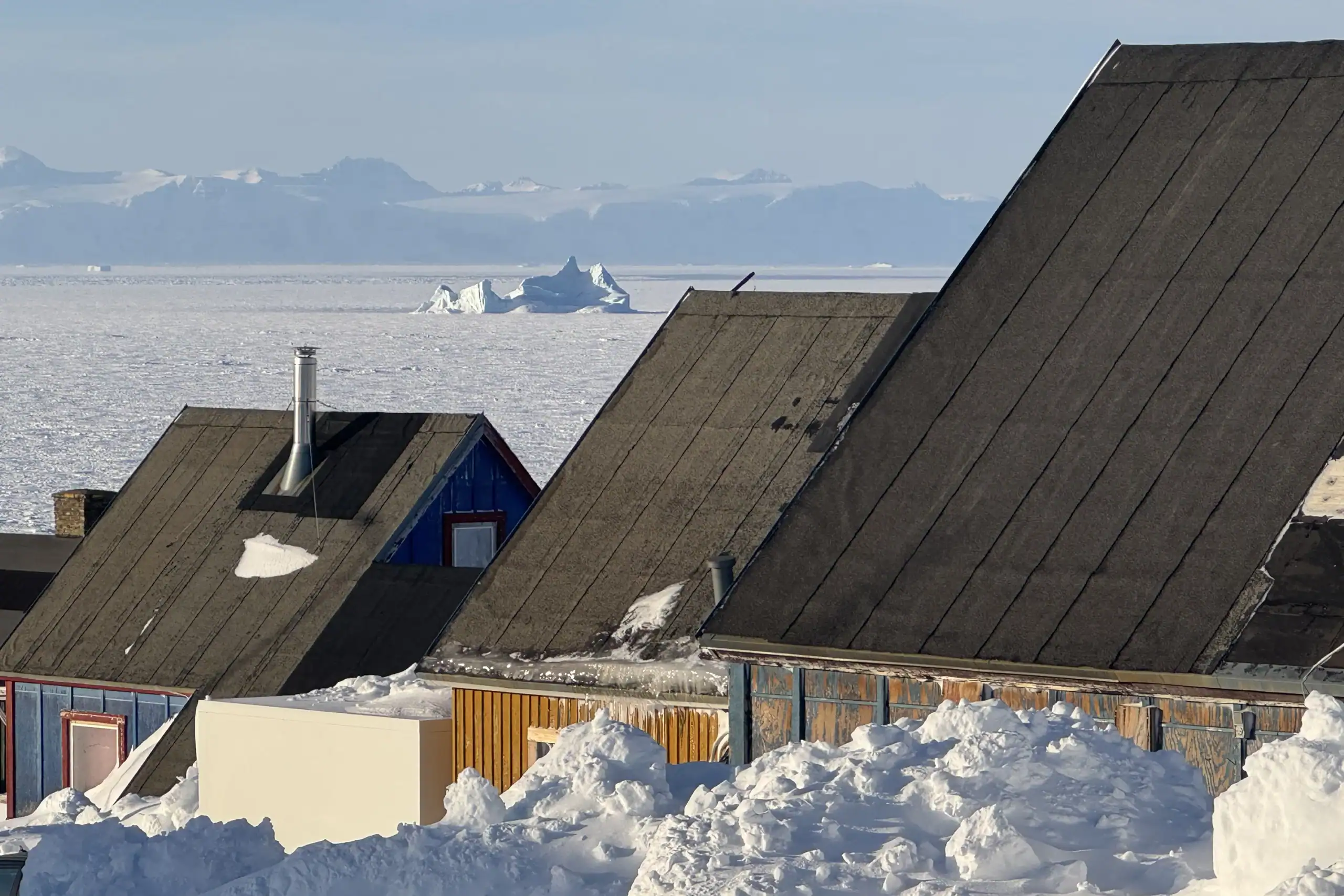
The next morning, we awoke to a vibrant day. The sun was shining and Ittoqqortoormiit seemed alive with people walking to work and school. Trucks were ploughing snow and making deliveries and the view from the top of the hill over the colourful community was exciting. My companion and I went for a quick walk and made friends with some kids building snow forts and several wayward dogs.
The roads in Ittoqqortoormiit were ploughed through deep snow drifts that towered above the snowmobiles and trucks as they passed through. It was just another day for everyone but me and my companion. For us, it was the start of an awesome adventure.
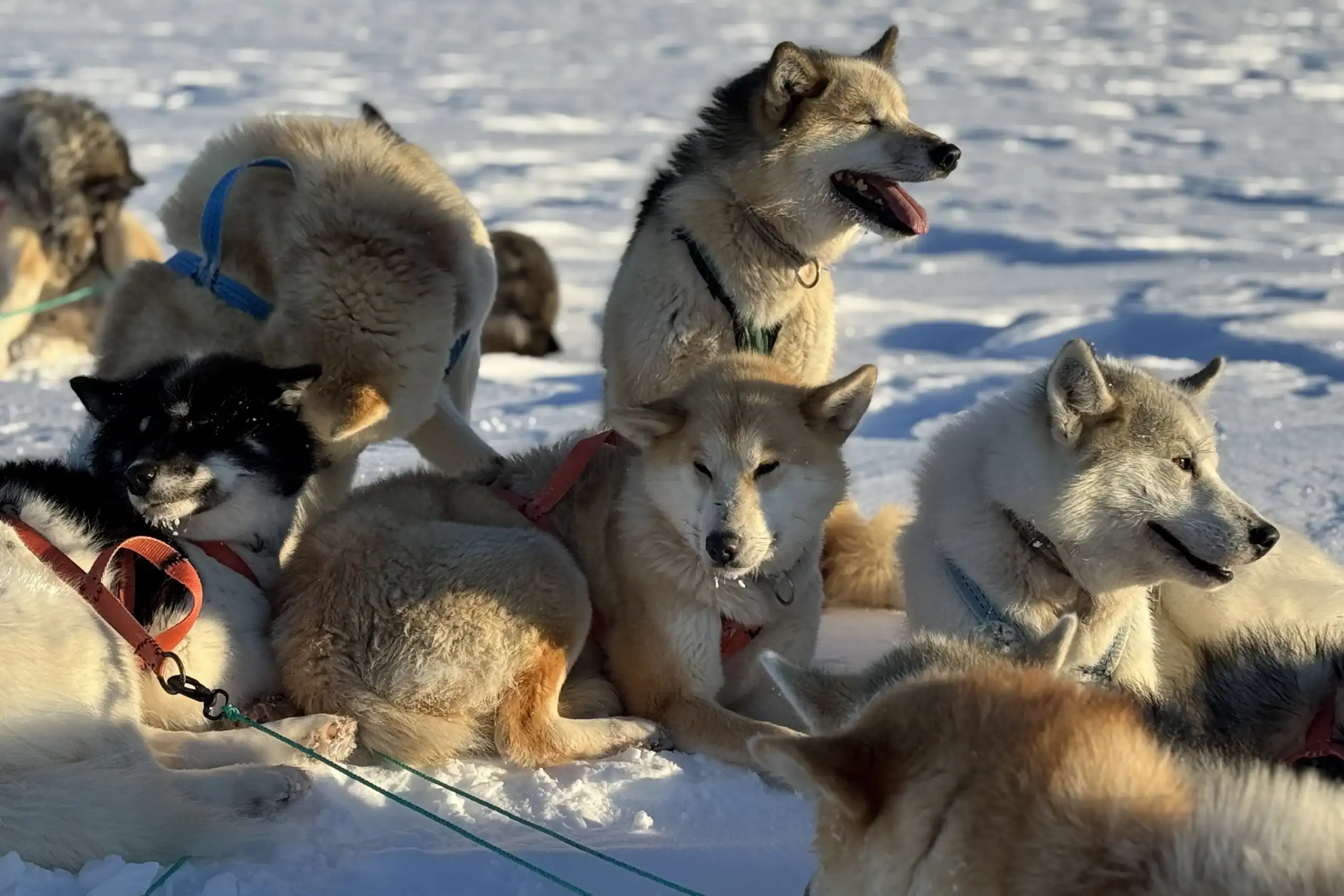
We said goodbye to Charlotte and joined Martin and fellow guide Gabbe down on the frozen fjord at the edge of town. The dog teams were all eagerly awaiting their opportunity to run and pull. If you haven’t heard what that sounds like, it’s loud! We helped load the dogsleds with boxes of gear and food, which were then covered with thick muskox fur to make a cosy and comfortable sitting platform.
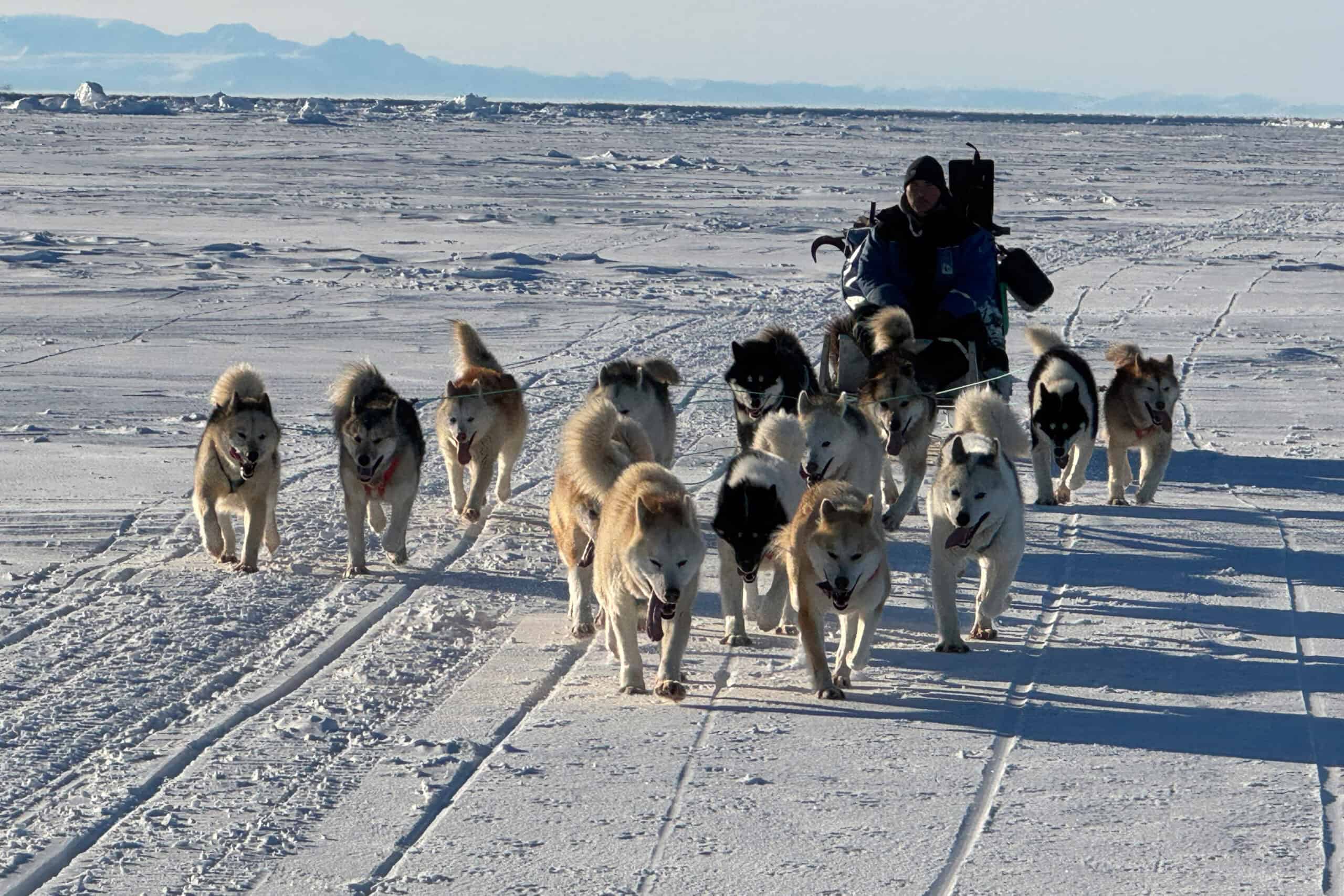
As we sat and watched, Martin and Gabbe harnessed the dogs and brought them, one by one, to the dogsleds. They were hitched to the dogsled in a fan hitch. This is the traditional Greenlandic style of dogsledding in which every dog has its own line going back to the sled. I was on a dogsled with Martin and my companion was with Gabbe.
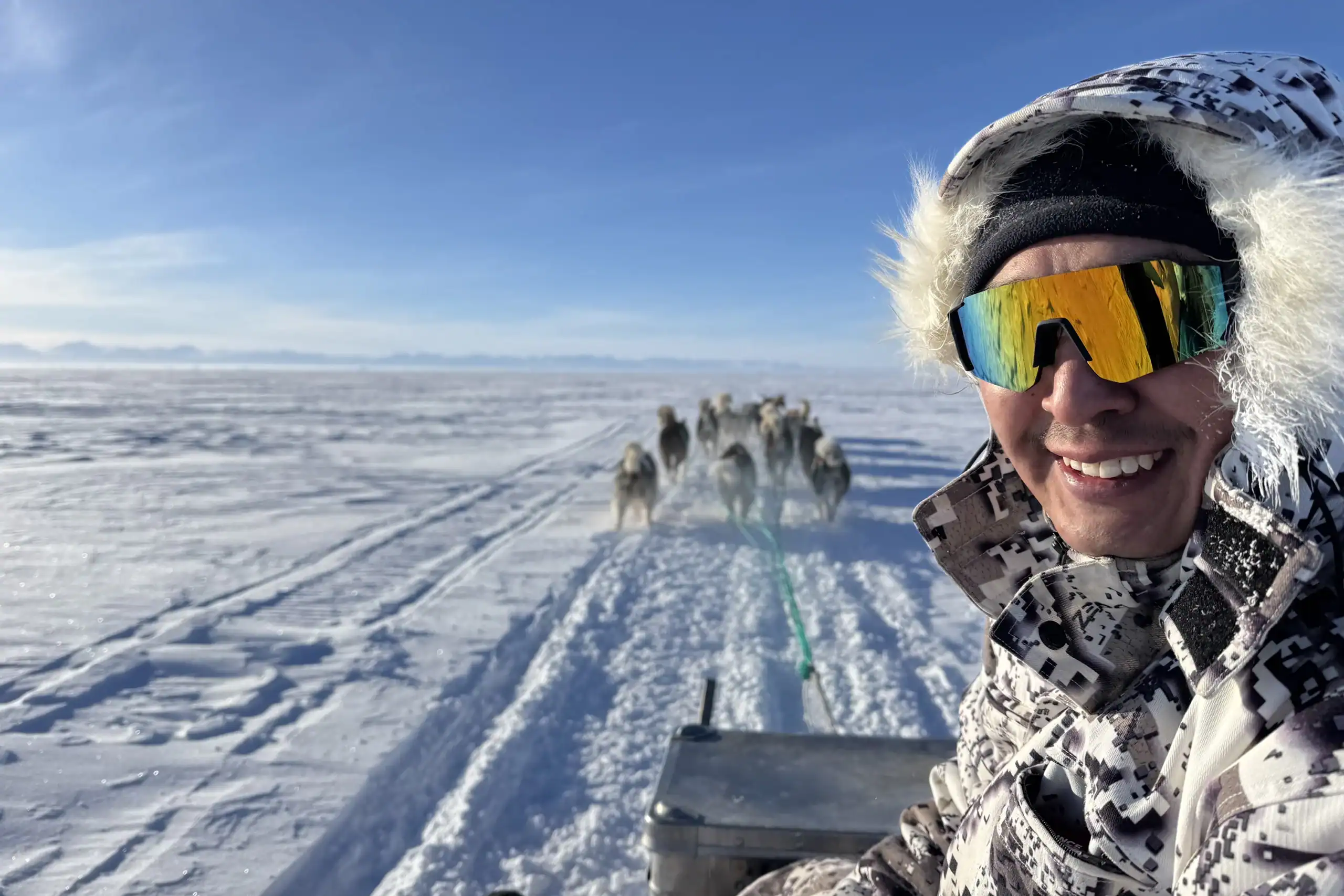
With an almost deafening chorus of barking dogs, Martin let go of the sled’s anchor and gave a command to the dogs. He didn’t need to; they were jumping at the chance to start pulling, but as soon as Martin shouted “Hoe!” they took off running and it became silent. The only sound was the swish of the sled’s runners on the ice and the occasional “yip” of Martin communicating with his dogs.
The relationship between the dogs and their musher is significant. Martin told me each dog’s name (my favourites were Scoresby and Scooby) and through his hands and his growing use of the English language, I learned about their personalities. Martin has been running dogs since he was three years old, when his grandfather first gave him a small team. His relationship with the land and his community is embedded in his relationship with his dogs. They don’t break like snowmobiles do, they don’t need gas, they smell bears and muskox (and want to run faster to get them), and they are good companions. It is a beautiful connection and one that I admire very much.
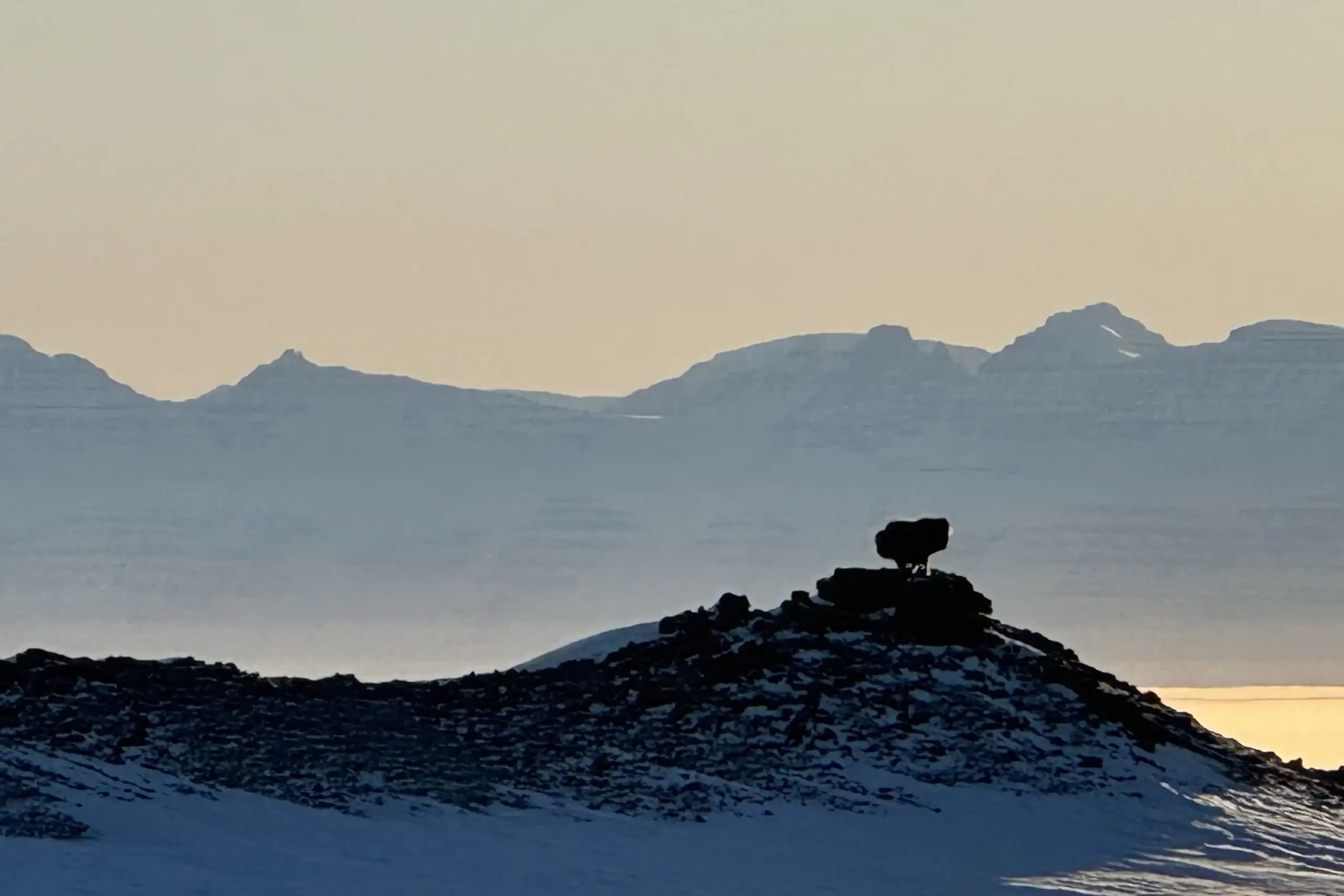
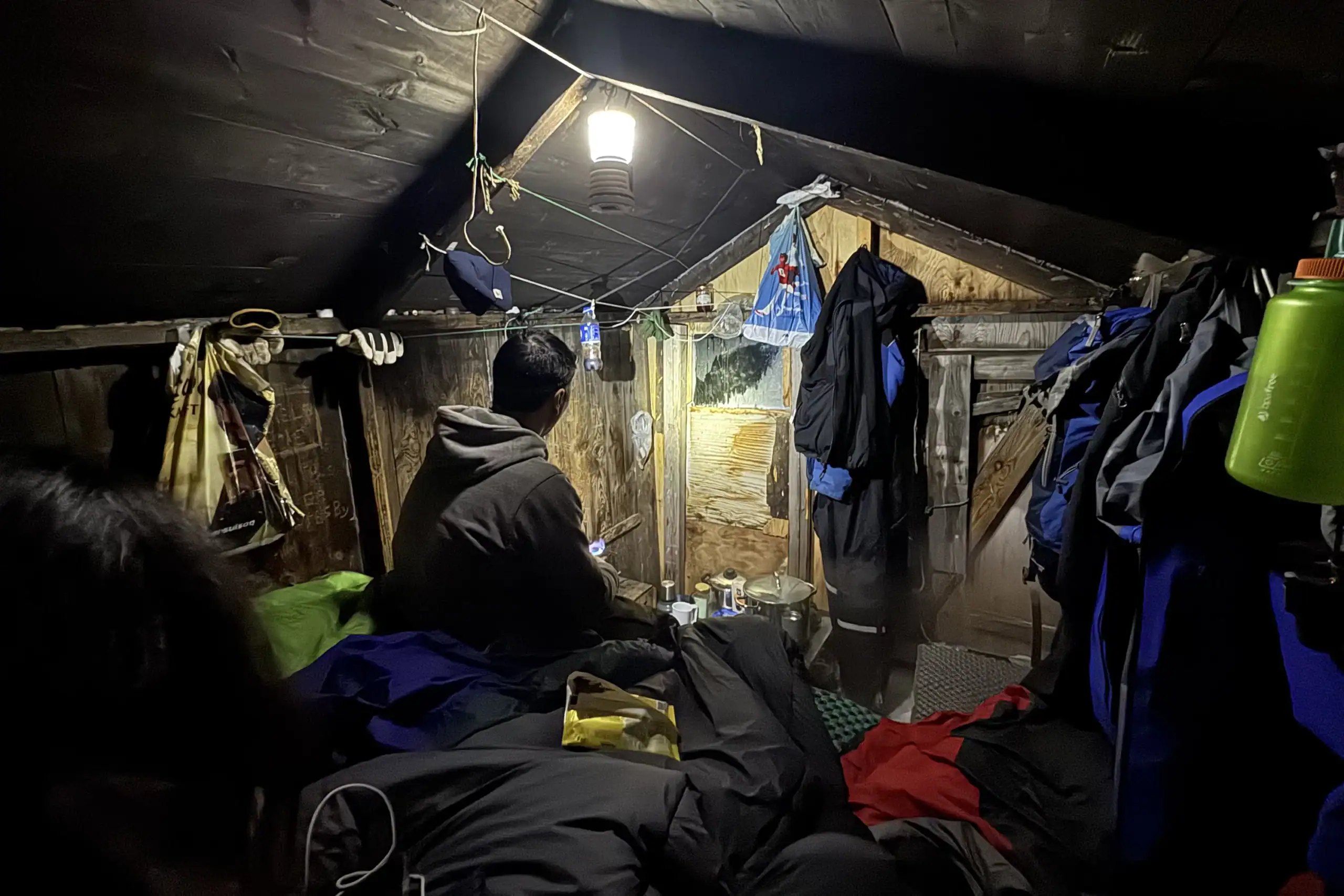
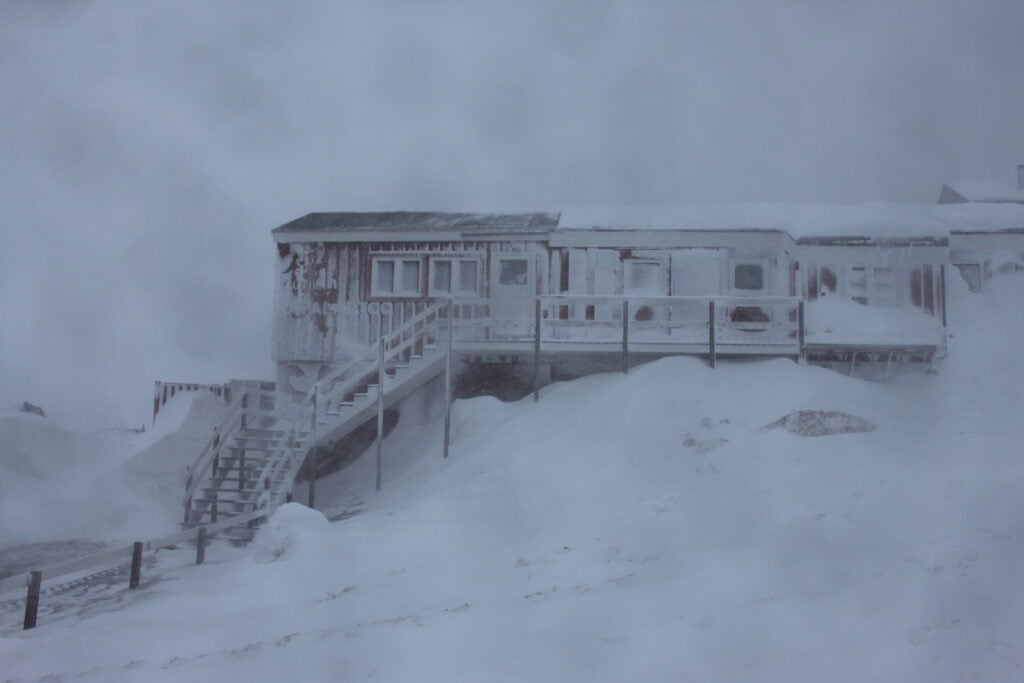
Our first night was spent in a small building that’s a part of an old, almost abandoned, community that’s a half-day’s travel from Ittoqqortoormiit. It still gets used on weekends by many families, or as a place to stay on overnight hunting trips or outings. Many of the buildings are in the process of falling apart and are not being maintained. The wind and snow would pass right through them, leaving snow drifts in what was once a living room or bedroom. The pictures on the walls, or the shoes still left in a corner, were reminders that these buildings have stories and that the past is still very much alive. In one building, we saw a polar bear skin meticulously stretched out near the rafters.
We made ourselves comfortable in an old community building with a big room. We laid out our sleeping pads and sleeping bags on the floor while Martin and Gabbe made a hearty supper. The place was spartan but more spacious than camping in a tent. We had a solid roof over our heads, a heater to provide warmth and windows to look outside. We had everything we needed and nothing more. We shared some stories and I wrote in my journal. A walk outside after the dark revealed the northern lights dancing overhead in light and dark waves of green.
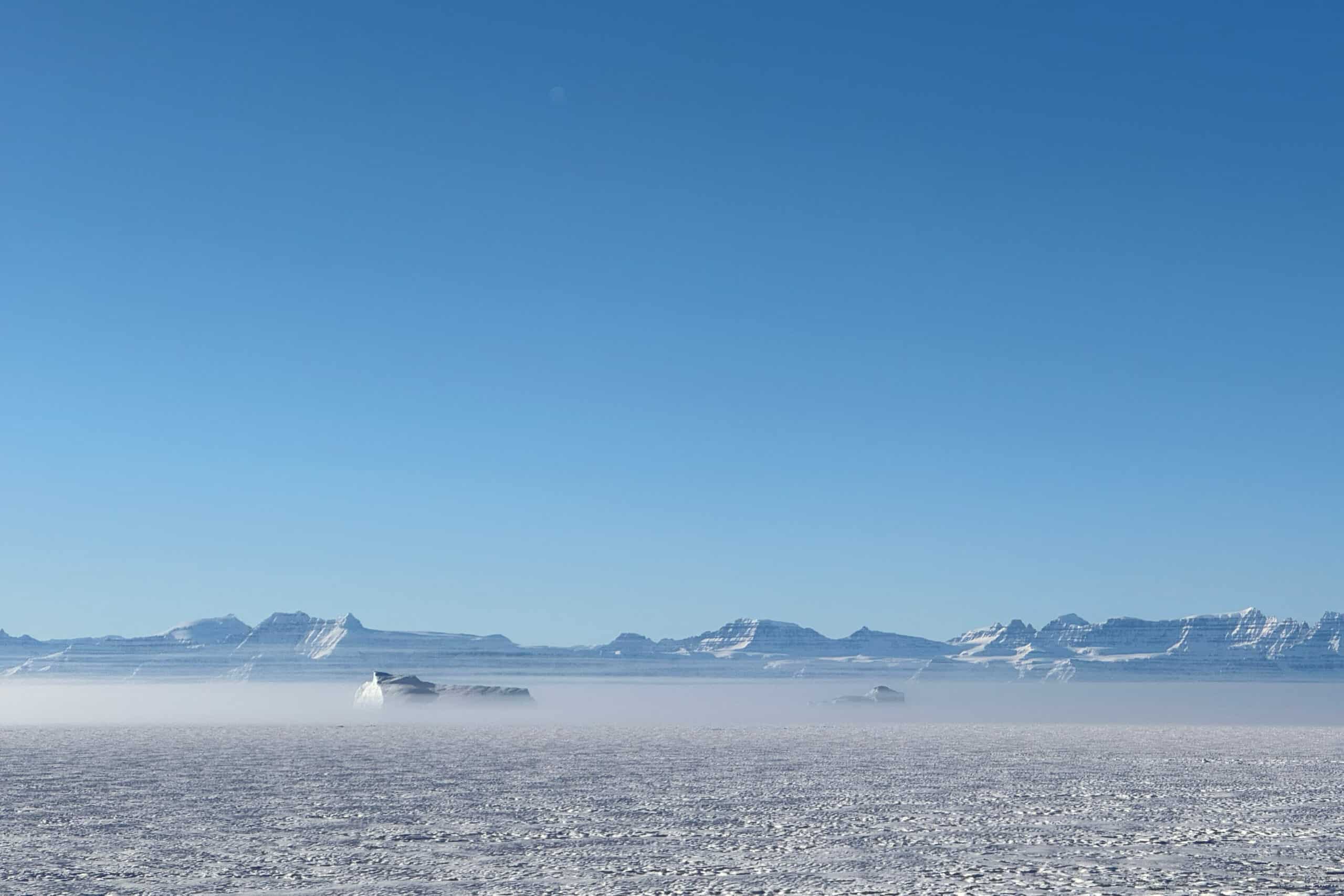
The next couple of days, we travelled along the coast of Scoresbysund, stopping for breaks to have a warm lunch and stretch our legs, or to hike to the top of a hill. It was incredible. The temperatures were cold, around -25 °C, but the insulated suit that Martin provided, along with a good facemask, helped to keep me warm. That and some kicking and jumping when we stopped for a break. At night, we stayed in very small one-room wooden huts with platforms for sleeping. The four of us often slept like sardines in a tin can; close, cosy and comfortable; as if we were on a grand adventure, which we were.
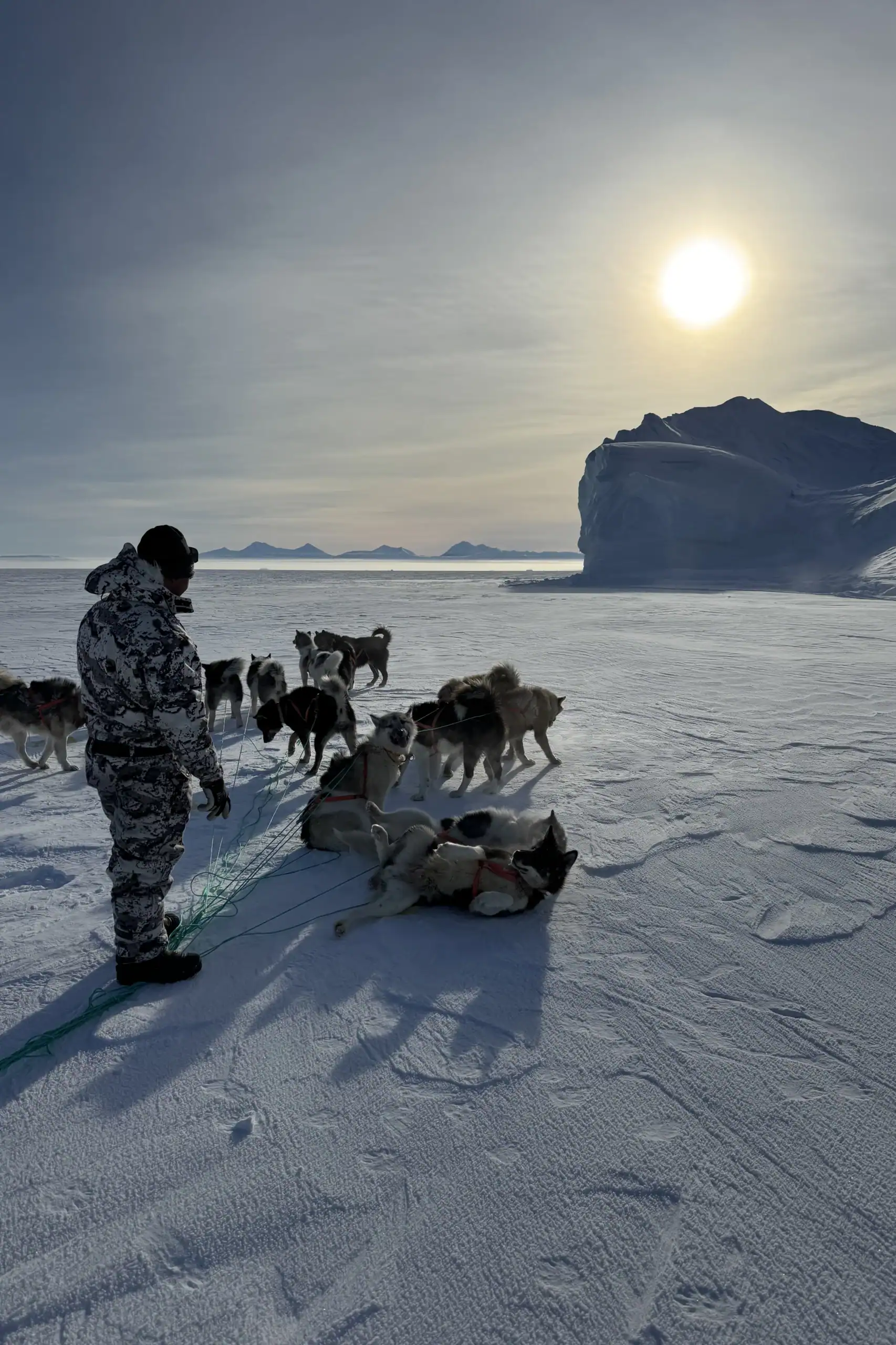
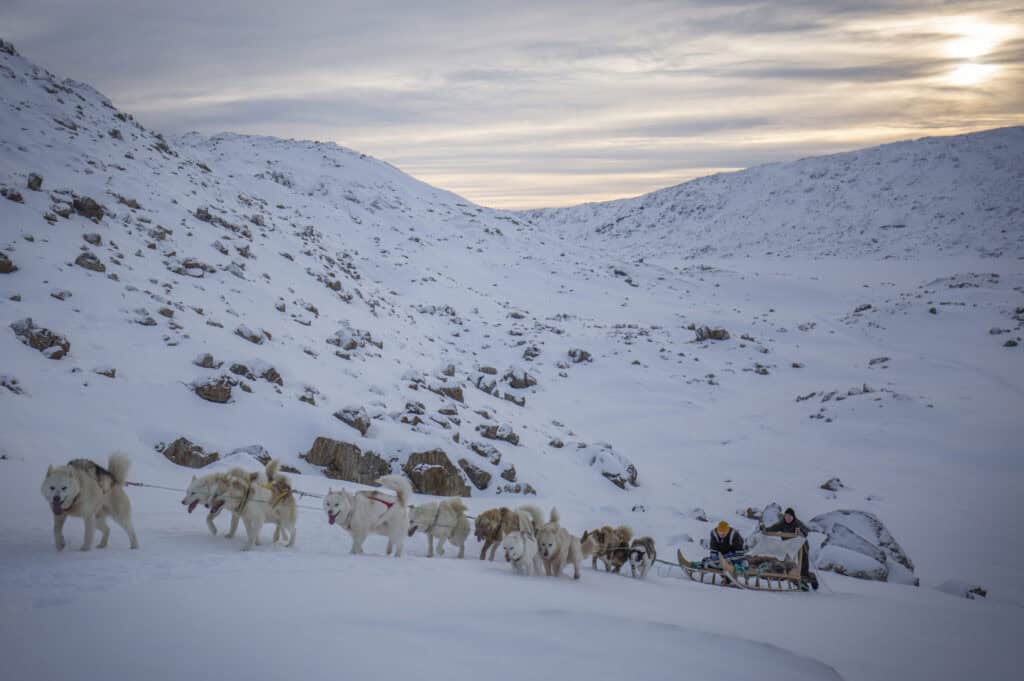
On one particularly sunny and calm day, we left the coast of Scoresbysund for the hills that run parallel to the coast. The terrain required more advanced dogsledding and it was so much fun. On the uphill, we walked next to the sleds to lighten the load for the dogs. On the downhills, we held on tight, shifting our weight from side to side, as if we were on a motorcycle. Martin and Gabbe masterfully used large braided ropes to steer and brake the sleds. It was thrilling and engaging.
Martin and his co-guide Gabbe are hunters who are constantly looking for wildlife. This was not a hunting expedition, but it’s impossible to take the “hunt” out of the “hunter”, and their eyes were always scanning the sea ice and land for polar bears and muskoxen. On this day, high up on a ridge, we saw three muskoxen basking in the sun atop a large rock. I could see Martin thinking about what his next steps would be if he were hunting, but instead, he told me about how muskoxen move and where he thought they would go next.
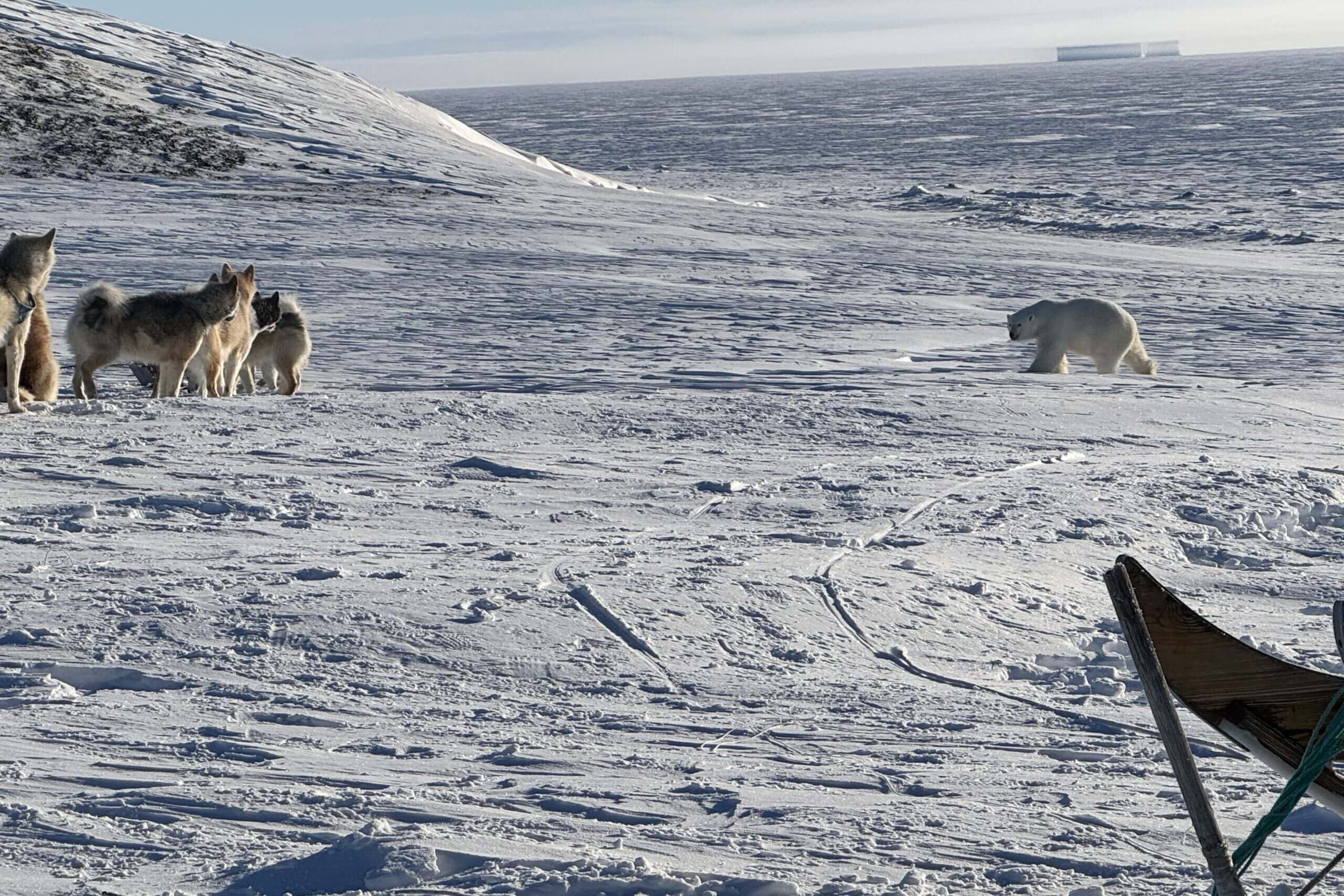
Twice we had a polar bear come into our camp. The first time was in the late morning. The sun was shining and the bear looked very relaxed. Even the barking dogs didn’t break his curiosity. He came pretty close to our hut and to the dogs, but they did a good job of keeping him at bay with their growls and lunges from their gangline. Eventually, he meandered away. Martin and Gabbe were casually ready with their rifles. As hunters, they may have wanted to shoot the bear, but instead they watched him with us and told us what the bear was doing. Still, I was happy to have these two hundred and their rifles nearby!
On another occasion, this time at night, a bear came even closer. The dogs alerted us to the bear’s presence, and with strict instructions to stay by the cabin door, we watched as Martin and Gabbe walked towards the bear and fired warning shots with their 30-6 rifles to scare it away, which they did. We did not see much of the bear because it was cloudy and dark. But in Martin’s headlamp light, I could see it react to the warning shots and slowly run away.
On our last day of dogsledding, we met up with an older hunter who had just killed a polar bear. He had already skinned and quartered the bear. Each leg and the torso would go to different people in the community. The liver was buried. I looked closely at the skull. I felt the tongue, which was still warm.
As a polar guide, I spend many hours pacing back and forth outside my tent in the middle of the night doing polar bear watch. I had never been so close to a bear, examined its jaw and teeth, or felt the roughness of its tongue. I am not a hunter, and I don’t think I would ever enjoy hunting.
But after spending time with Martin, Charlotte and Gabbe, learning about their families and their traditions, and watching this bear being processed by hand, I felt that this experience was an important glimpse into Greenland’s culture and significant hunting heritage.
Later that day, we returned to Ittoqqortoormiit. I was excited to see Charlotte and enjoy her hospitality, positive energy and the warmth of their home. I savoured a hot shower and watched the highlights of Ittoqqortoormiit’s youth football team (they won!). I heard about the preparations for the national elections, which were the next day.
The following morning, after saying goodbye to Martin and Charlotte, whom I now consider my friends, I returned to the Nerlerit Inaat Airport by helicopter. I enjoyed the incredible view with a newfound respect. Respect for the beauty and abundance of East Greenland, its frozen sounds, its rugged land and especially for all its inhabitants, both the two and four-legged kind.
Tips for Dogsledding

- Go with a professional guide who has experience bringing “regular people” on adventures and who has a passion for sharing knowledge. I recommend Martin and Charlotte with Tsigaar Naasor.
- Don’t expect too much hand-holding. If you need anything, you can ask for it, but your guides will not be checking with you all the time to make sure you’re OK. If you’re cold, say something. If you’re hungry, let them know. Ask questions and learn as much as you can from your guides.
- This is a real adventure. No fancy hotels, no fancy tents, no fancy anything. Be prepared to go to the bathroom outside. Be prepared to be uncomfortable sometimes. But also, be prepared to have an amazing experience.
- East Greenland in March or April is cold. Riding on a dogsled is amazing, but you won’t be generating much heat. Bring chemical warmers for your hands and feet and keep them in easy-to-access pockets. If you need help staying warm, let your guide know.
- Confirm what gear will be provided and what you need to bring with you.
- If you sleep cold at night, consider bringing a thin sleeping bag and sleeping mat to use with the sleeping system that your guide provides.
- Be prepared for some downtime. Adventures in East Greenland move at a slower pace than elsewhere. There will likely be times when nothing is happening. Not every hour will be filled with activity. Expect some downtime, and you may learn to appreciate it.
- Have a flexible travel itinerary. Everything related to your travel is weather-dependent. Flights are frequently delayed or rescheduled. Have a flexible schedule that allows for delays. Avoid booking unchangeable flights or events surrounding your adventure.
- Purchase travel insurance! This can help offset the cost of weather-related delays or other covered delays and events.
- Read about East Greenland! One of my favourite books is The Sledge Patrol by David Howarth. It’s hard to put down, especially if you are reading it at night while sled dogs are howling outside the tiny cabin you’re sleeping in after an amazing day of dogsledding!
Explore Our Winter Itineraries
Browse our carefully crafted winter itineraries designed to make the most of your visit to East Greenland.
A 6-Day Winter itinerary – Tasiilaq
A Winter Escape to Tasiilaq – A 5-Day Itinerary
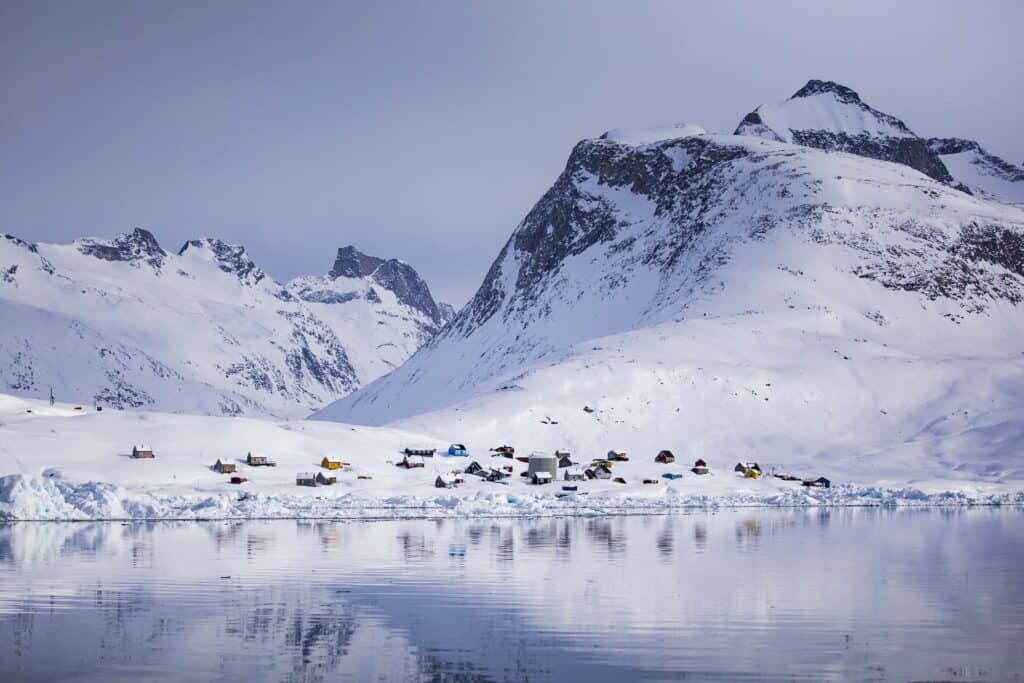
A 7-Day Winter Itinerary Through East Greenland
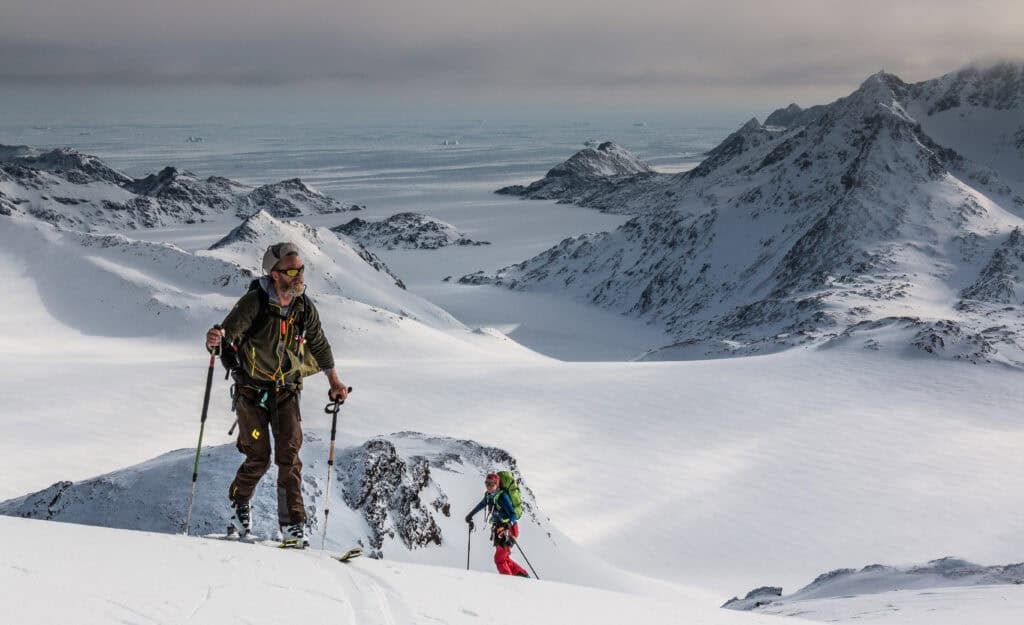
Wilderness ski touring and exploration in East Greenland
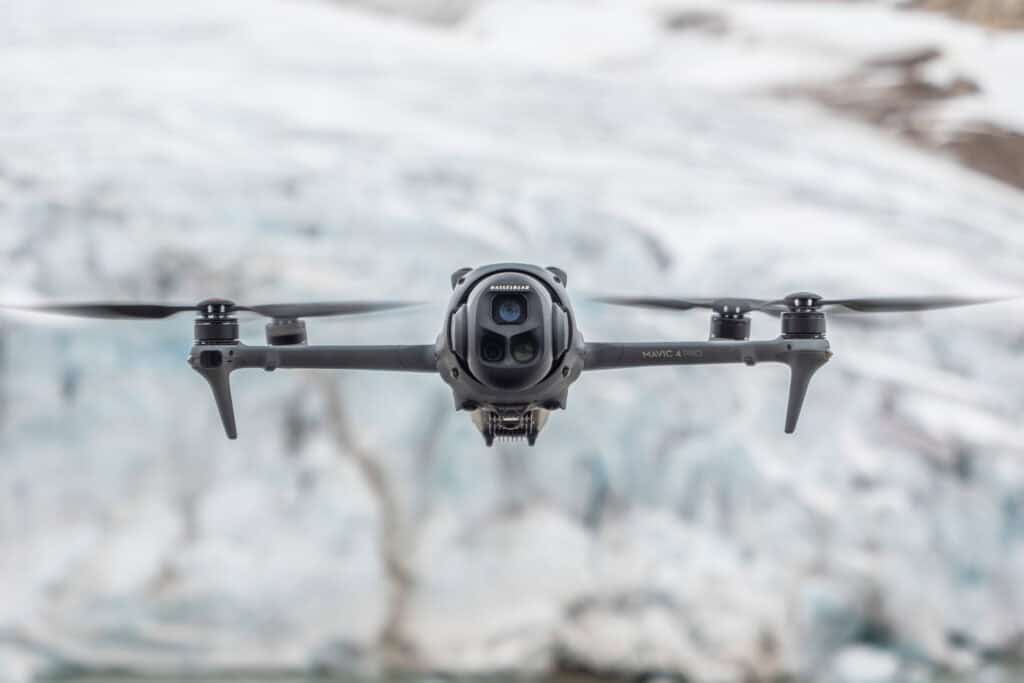
Drone Flying in East Greenland: Essential Tips & Regulations

Travel Diary from a Dog Sledding Adventure in East Greenland

Analogue Horizons – A Photo Journal
Plan Your Trip
Plan your East Greenland adventure, tapping into local knowledge, expert tips, and essential planning tools.
Towns & Settlements
Explore East Greenland’s quaint towns and remote settlements, discovering unique landscapes, rich culture, and rugged Arctic beauty.
Tour Providers
Once you’ve chosen your adventure, book your East Greenland journey through local operators or plan it independently.
Articles
Read through our curated articles about East Greenland, deepening your insight into its seasons, traditions, and wonders.
Resources
Discover East Greenland’s essential resources and planning tools, ensuring deeper insights, trusted guidance, and a fulfilling adventure.